
The customer data platform for the agentic era
After months of building alongside our customers' marketing teams, we are officially launching DinMo's Agentic CDP. Here is what that means, what we learned, and where we differ.


Summary
A CDP made customer data usable. An Agentic CDP puts it to work.
Much of the industry builds agents to run marketing on its own. We build them to accelerate marketing teams.
Dan, our AI agent, works from one customer context and turns a marketer's intent into work ready to run. The team reviews it before anything runs.
Connect each tool once. Decide in DinMo who may read what, and act where. Your teams, Dan and any agent your company chooses reach your warehouse and your marketing platforms through one gateway, each with the access it was given and nothing more. We believe that is the job of a customer data platform in the agentic era.
We commit to composability: your warehouse, your tools and your models stay yours. What your company knows about its customers should outlast all three.
A customer data platform used to have one job: make customer data usable. Data had moved to the warehouse, and the teams closest to the customer still could not reach it without a ticket. DinMo was built to close that gap, and marketers now build and activate audiences in it every day.
That job is changing. Every new agent, on the company's side and on the consumer's, is another place where a decision is made about a customer. Those decisions need the same customer context: who the customer is, what the company has promised, which rules apply. Faster execution on a scattered picture amplifies every mistake.
A CDP made customer data usable. An Agentic CDP puts it to work. This is what DinMo is now:
Each of those four lines is a section of this article. We begin with why we built DinMo this way, before introducing our AI agent, Dan.
Why we built an Agentic CDP
Much of the industry is building agents as a workforce that runs marketing on its own. We are building them to accelerate marketing teams.
We spent this year working alongside our customers’ marketing teams, through DinMo Labs. What we found is that waiting, more than tools or skills, made these teams miss most of their opportunities.
To get a simple answer, a marketer had to ask someone and wait, or open several tools. Projects that would have created real value were abandoned along the way.
There is far more to improve in the customer relationship than any team has hands for: the message that should not have gone out, the customer nobody called back, the test that never ran. We build agents to give teams that capacity.
The number of tools is a problem of its own. Each one holds part of the picture of the customer, and an agent that moves fast on a partial picture makes mistakes faster.
Most vendors are responding by owning more of the stack. Warehouse-native CDPs now deliver messages, data platforms embed CDPs, and engagement platforms launch data platforms of their own.
The industry spent a decade moving away from the CDP that owned everything, and we don’t intend to rebuild it with agents inside. Companies run several tools for good reasons: different brands, markets, teams and channels.
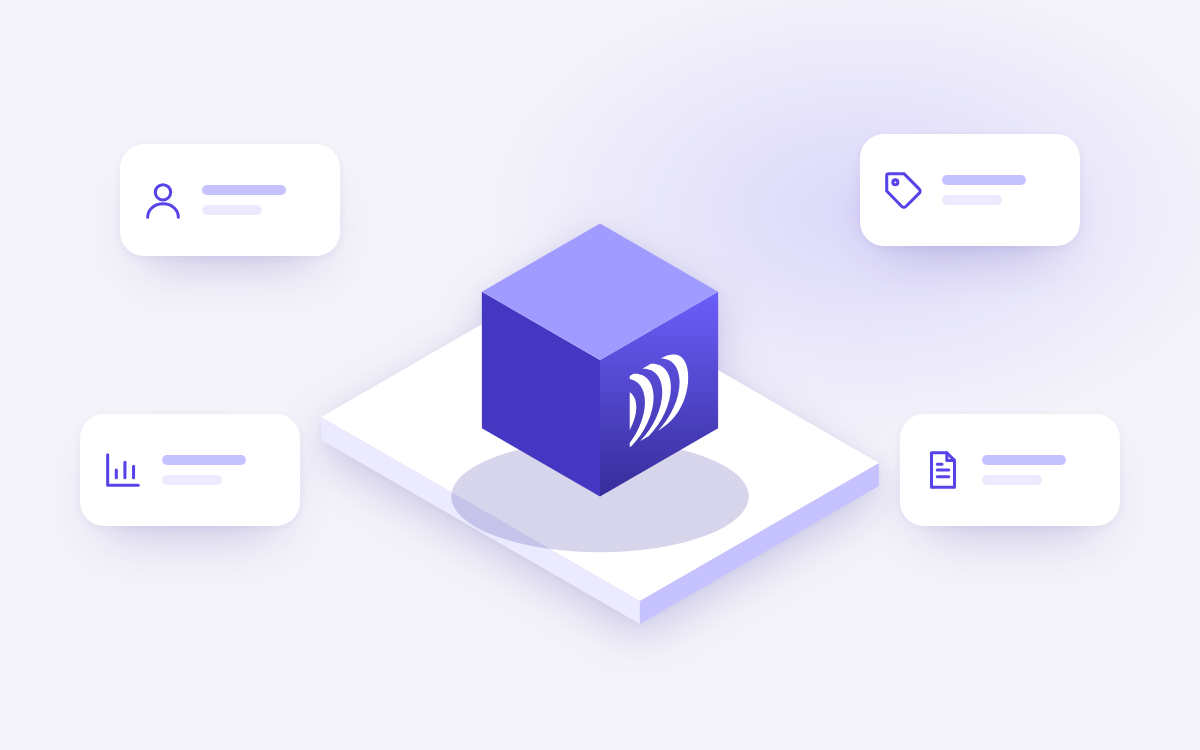
Our choice is to make the stack work together, around one customer context that every team and every authorized agent can use. DinMo owns none of your data, your channels or your models. It holds what sits between them: the context agents work from, and the boundary they work within.
AI agents that put customer context to work, starting with Dan
Don't just ask your data a question. Give Dan an outcome.
Dan is the AI agent inside DinMo, built for the capacity our customers were missing. It works across the platform, not as one assistant per product.
Take a familiar problem: first-time buyers are not coming back. Tell Dan the outcome you want, a second purchase. It reads your customer data through DinMo, compares the right periods and finds where the drop is concentrated. Then it shows its method: what it read, what it counted and which assumptions it made.
From there, it proposes one plan: the audience, the journey, the activation, and how the result will be measured. You review it once, as one object, adjust it and approve it, and the work runs through DinMo.

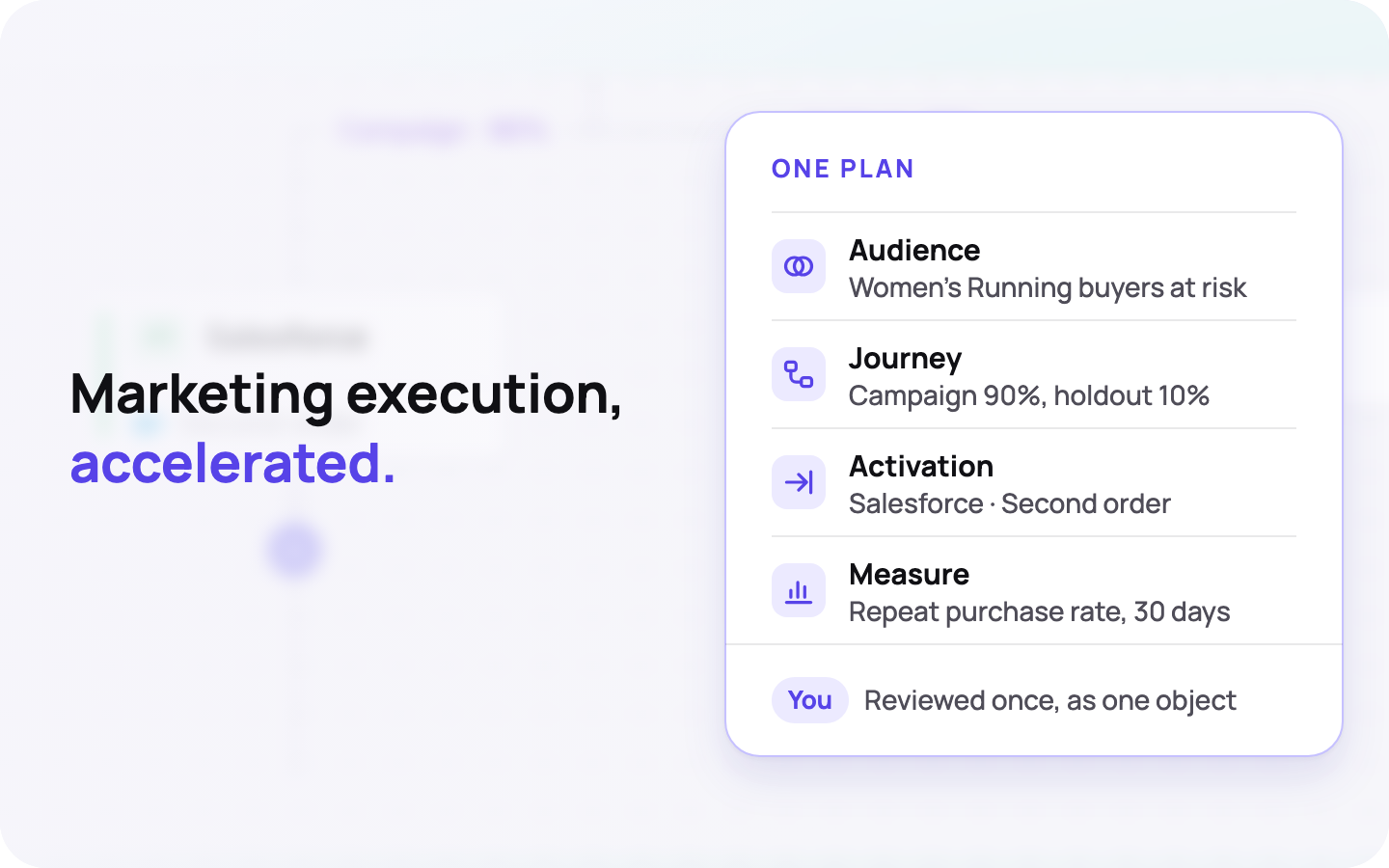
Dan's work continues after the launch. It can turn an analysis into a scheduled report that keeps its method and evidence, re-check an audience, or monitor results against a control group on the dates you set.
In all this work, Dan plays three roles.

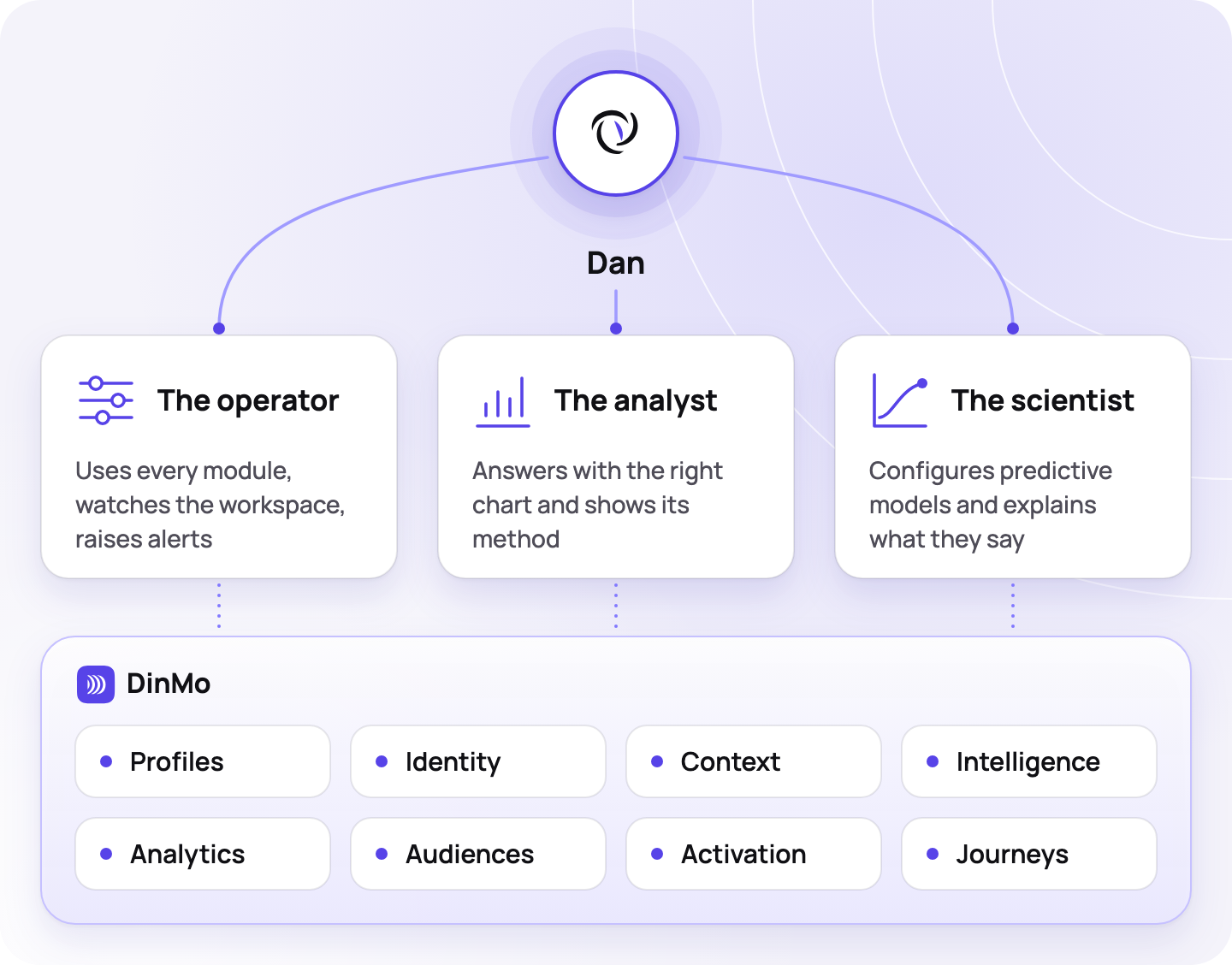
One agent, three roles, across every module.
As an analyst, it investigates what changed.
As an operator, it prepares the audience, draws the journey across your tools and sets up the activation.
As a scientist, it runs predictions: who is likely to churn, which products to recommend and how sensitive each customer is to a discount, so the team allocates discounts by its own rules.
Reusable skills let Dan follow your company's methods for jobs such as investigating retention. You can also create your own agents inside DinMo, with bounded missions, using your metrics, customer definitions and incentive policies.
Marketers direct the work and bring the judgment. Dan handles the investigation, preparation and configuration, then brings the proposed work back for review.
The customer data harness for marketing agents
The scientist's role is where expectations and practice part ways. A language model reads, reasons and writes well. It will not predict which subscribers will churn next month, or which of forty thousand products to recommend to someone who has bought twice, and nobody should ask it to.
Those are jobs for models trained on your data. We have built them since DinMo started, and they now work as single-task tools Dan can call: a predictor, a recommender, each doing one job well.
A publisher gets churn and subscription models that understand tenure and renewals. A retailer gets recommendations, lifetime value and product affinity.
Those tools are the industry intelligence behind Dan. When it needs a churn score or a recommendation, it picks the tool that fits your context, proposes to run it and uses the result. It does not train a model, wait for it or stand up infrastructure, because the platform has already done that work.
The agent brings the reasoning and the tools bring the numbers. Engineers call this assembly a harness: the equipment that makes a model useful. Ours is built for customer data, and it has three parts: the tools of the trade for your industry, the customer context the agent works from, and one boundary around everything it does.

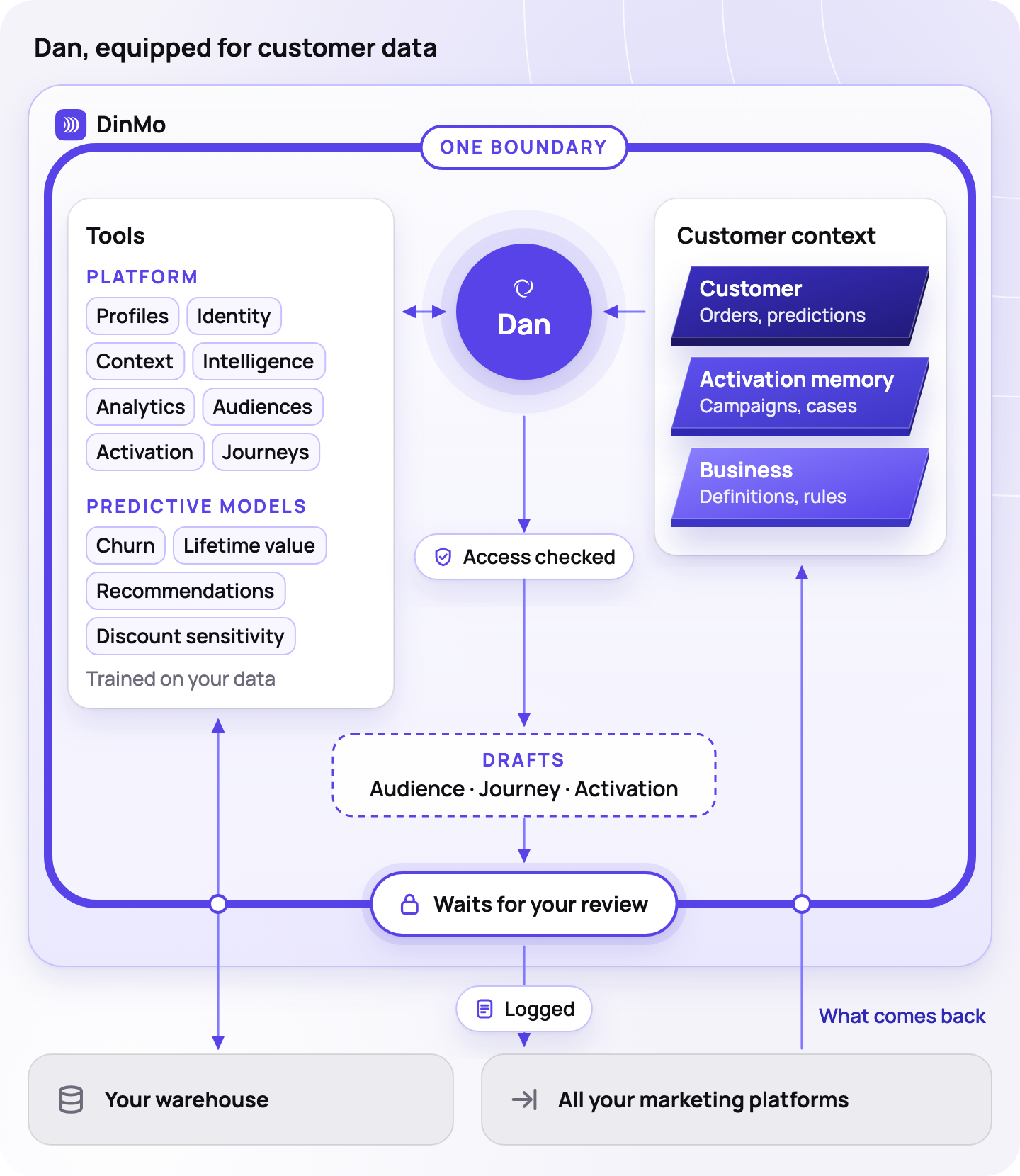
Dan’s harness for customer data
One customer context for the whole company
Give an agent your warehouse without context, and it answers fast, and wrong.
DinMo first resolves a purchase, a support conversation and a marketing profile to the same person, using the keys in your data model.
That shared identity needs context, in three layers:
The customer: identity, behavior, transactions, preferences, and the predictions derived from them.
The relationship: campaigns, messages and offers received, responses, and activity in service or the product.
The business: your definitions, objectives, eligibility rules, consent requirements and contact policies.
Back to our first-time buyer. Imagine one who bought yesterday, received two promotions this morning and opened a support case an hour later, while an acquisition campaign still targets them. Each tool works as configured. Together they waste the budget and frustrate the customer.
An agent that reads only the warehouse sees a customer likely to buy again, and proposes a third promotion. Only the relationship and the rules say that today is not the day.

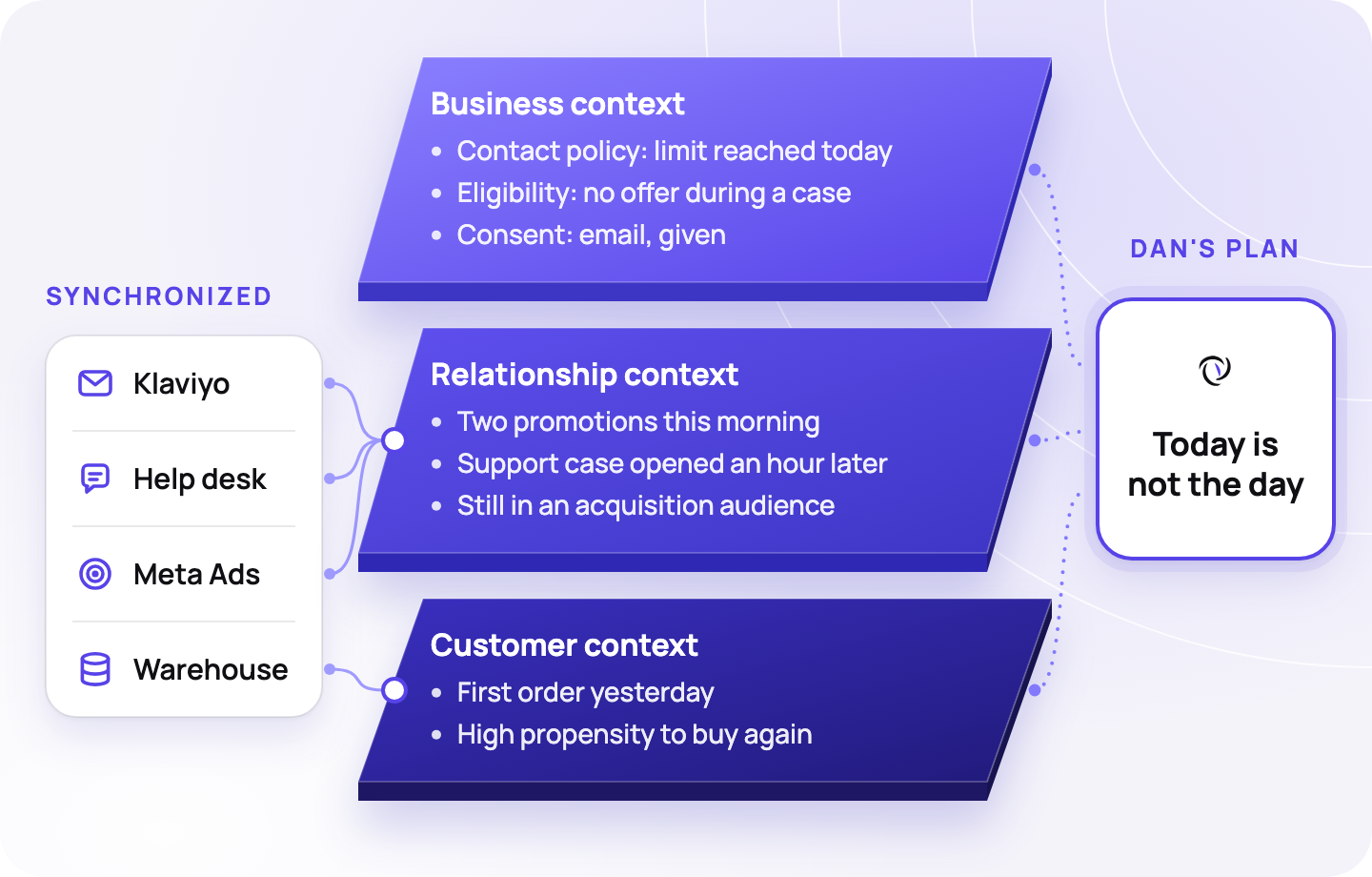
One first-time buyer, read through the three layers of context.
DinMo ties campaigns, interactions and results from your tools back to each customer, so Dan's plan can use both the score and the relationship.
The same is true of definitions. Ask an agent for your active customers and, with no definition to work from, it makes one up. Tell Dan what your company does. It analyzes your workspace and proposes definitions for your industry, such as customer value or an active subscriber, with their calculations and evidence.
You review and accept the ones that fit. From then on, an "active customer" means the same thing across analyses, audiences and journeys.
When the business changes who qualifies as a VIP, marketing, service and every authorized agent should work from the new definition. The company decides the policy; DinMo records it and carries it into the work.
DinMo also keeps what the company learns along the way: the definition that resolved an ambiguity, the reason an audience was excluded, the outcome of an action. The next person or agent starts from that knowledge instead of rediscovering it.
One gateway for people and agents
Connect each tool once. Decide in DinMo who may read what, and act where.
Not everyone can be given every tool. The email platform is built for the CRM manager, the ad accounts belong to the acquisition team, the warehouse needs an engineer. Yet the context they hold is useful far beyond them: to the analyst, to the CMO who needs to know what is being spent, to the CFO.
DinMo is where that is reconciled. One person with the right access connects a marketing tool or a warehouse once. From then on, within what your warehouse already grants, DinMo decides who may read which table, who may use which tool, and what each person may do there. We think this is the essence of a customer data platform.
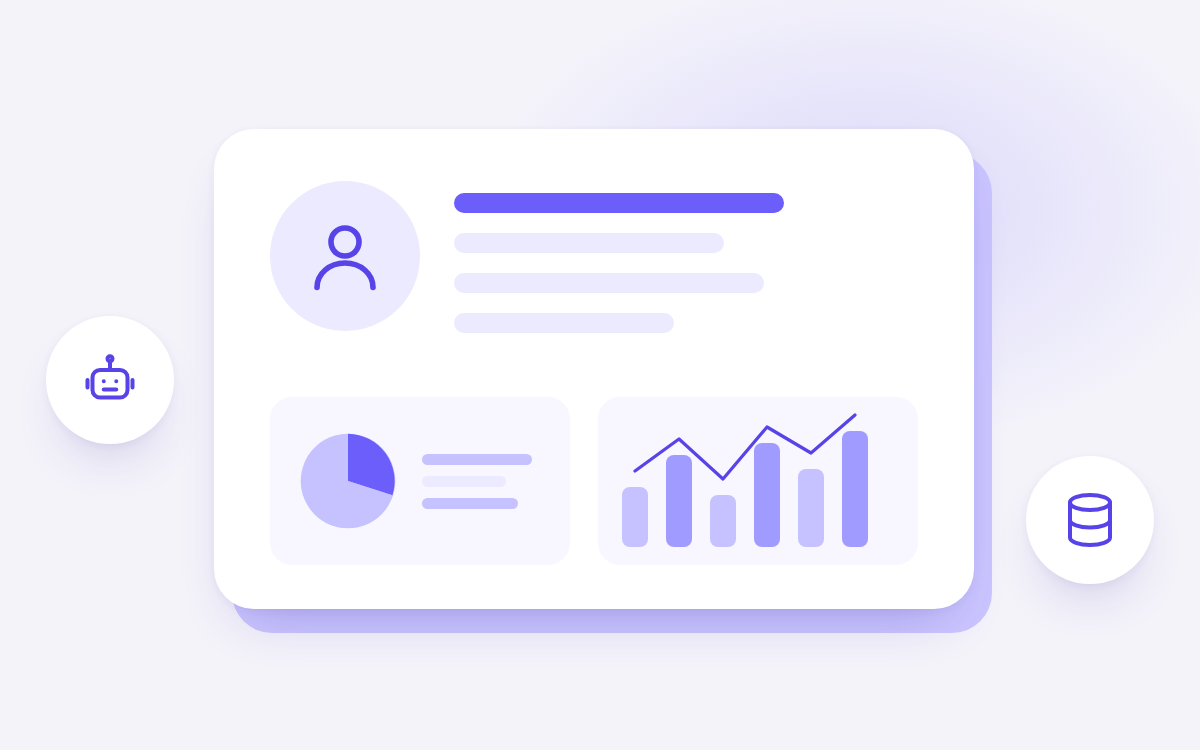
The same holds for agents. You will not connect every agent to every platform. An agent needs a gateway: one place that holds its access the way it holds a person's, so it reaches your warehouse and your platforms through DinMo, with what it was given and nothing more.

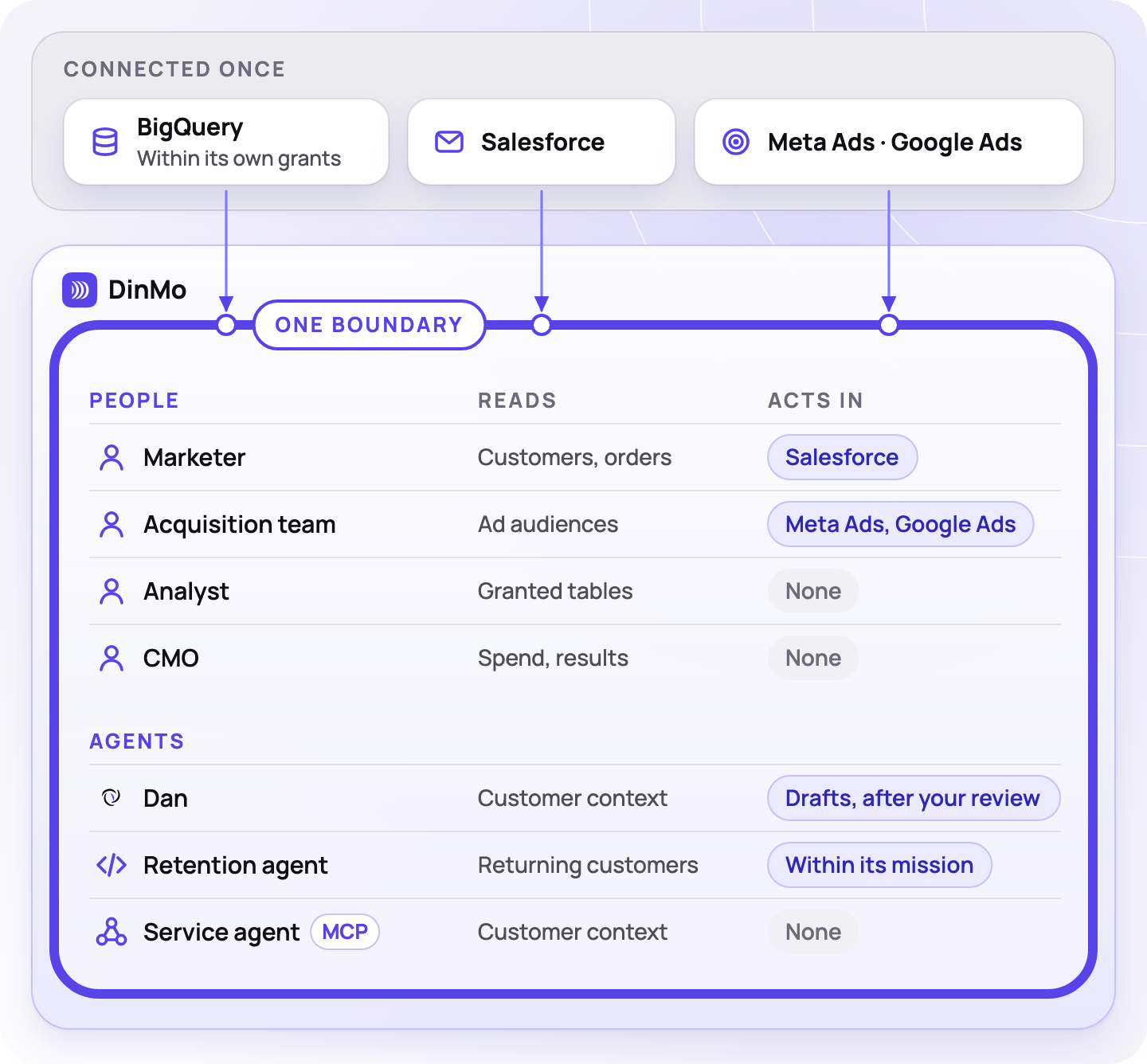
One gateway to customer context, for people and agents across the organization.
Marketing is where we start, and what is built there serves the whole company. The context and the governed tools around it are open to the other agents and applications your company builds or chooses, through MCP, the open protocol agents use to reach tools and data.
A service agent, an internal application and Dan work from the same definition of the customer, each within its own permissions.
One boundary for every action agents take
An instruction in a prompt is not a permission check.
Context tells an agent what to consider. The platform decides what it is allowed to do. Recording a contact policy does not enforce it. Enterprise AI needs both: shared knowledge, and controls at the point of execution.
Dan works through tools prepared by DinMo. It does not connect to your warehouse to run queries by itself. DinMo checks access, turns each request into a controlled operation and executes the authorized ones.
The same boundary covers every agent that works with DinMo, whether you equipped it, created it or connected it through MCP. An added agent inherits the company's rules and cannot widen them.
A marketer should be able to trust an agent's work by reading its logic, not its SQL.
Much of the market hands agents a SQL console and asks marketers to trust what comes out. We worked on the opposite problem: showing the method in the language the team already speaks.
Dan's drafts make the work explicit: the criteria of an audience, the calculation behind a definition, what a plan will create and how it will be measured. They use the same definitions as the team.
A marketer who has never written a query can read a draft, question a step and decide. SQL stays a tool for the data team, or for an agent that needs it, under the same boundary.
Dan proposes. DinMo verifies. You approve. Every action is logged. You can approve each change or authorize a defined scope of work, expanding delegation as the team gains confidence.
Our first-time buyer plan is no exception. The audience, the journey and the activation wait as one proposal until you say go.

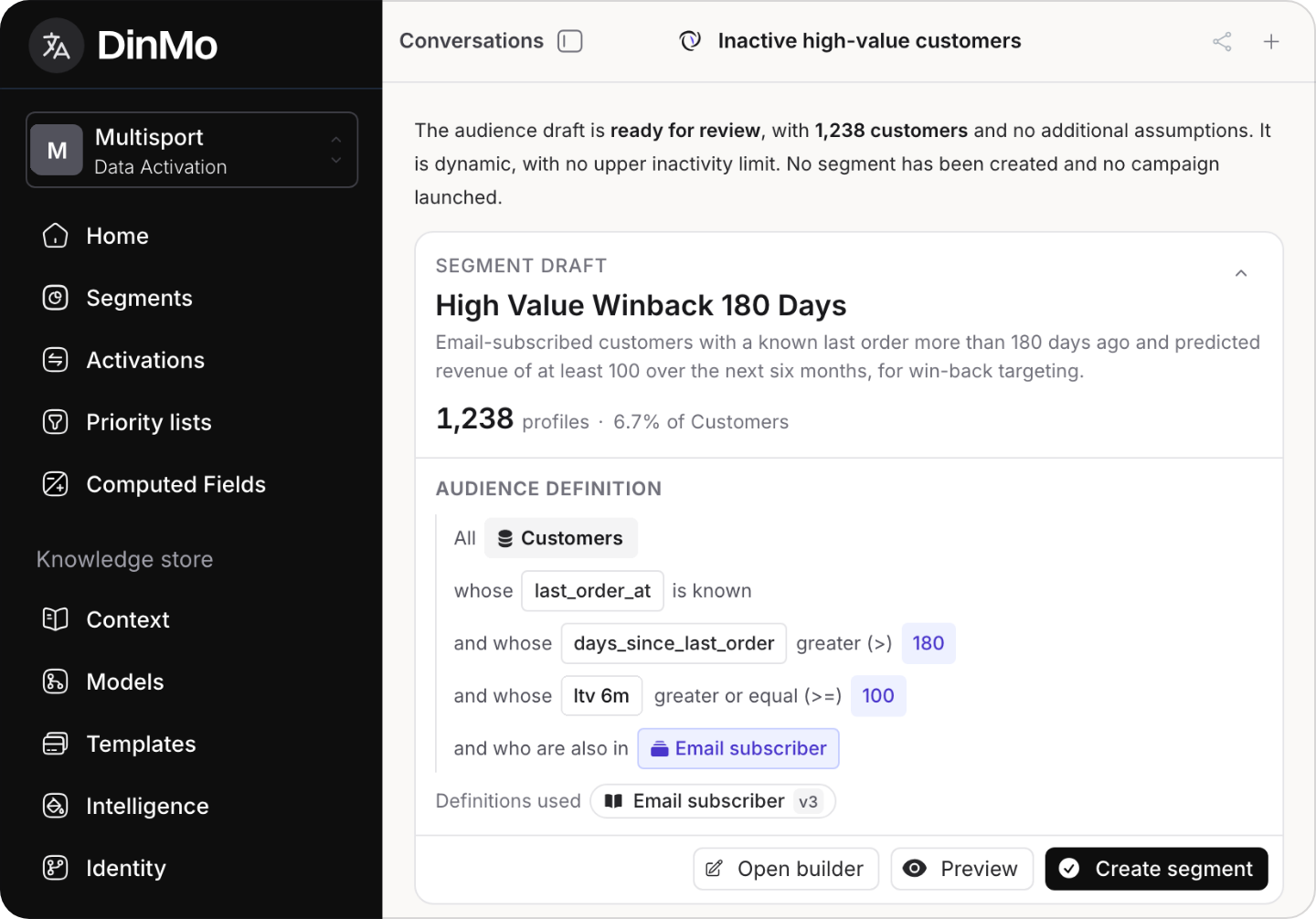
An audience draft from Dan: the criteria spelled out, nothing created before review.
Work done by agents should be as observable as work done by people.
A decision you cannot retrace is a decision you cannot learn from.
In DinMo, every step Dan takes is recorded, with what it read and why it chose that step, whether it answers a question in the moment or runs a report for months.
You can go back to any decision and see the path that led to it, and who approved it. The same trace has two readers: the team, in DinMo's audit log, and engineering, in your monitoring tools.
Because the boundary holds, teams can delegate. They keep working directly in DinMo and bring Dan in where it helps, knowing where the limit sits. The controls apply whichever model is at work.
A composable CDP, on the architecture you choose
A company should be able to change how it reaches customers without rebuilding what it knows about them.
DinMo stays composable. Your warehouse remains the data foundation you chose, and your data stays in it: DinMo works there. Your teams keep the platforms that fit them.
If you change your email provider, the journey for our first-time buyers keeps running. Only the sending step changes, and your customer definitions, exclusions and history keep serving you.
Engagement platforms deliver experiences across channels, and an integrated suite is right for some companies. Even then, what a company knows about its customers should stay useful beyond that suite.
The same freedom applies to AI. Bring your own: the models your company trusts, run in your region within the rules that apply there, and the agents your company builds or selects. The context and controls you set up stay useful as those choices change.
As a European company, we design for data privacy and for regulations such as the EU AI Act. We run dedicated European deployments for the customers who need them, and a company that prefers Mistral, or another model it trusts, can choose it.
What we mean by an Agentic CDP
An Agentic CDP is a claim about results, so we measure it as we measure everything in DinMo Labs: the time from a question to a decision, the effort to coordinate an action, the spend avoided, and the results for customers, net of the cost of the work.
Where we claim that an action caused an improvement, we want the evidence of a proper experiment. We decide on accumulated results, never on a single day.
In Labs, for an online retailer, our recommendations personalize the daily newsletter for each customer. In nine split tests, the personalized version won on clicks nine times out of nine, by 7.3%. Orders rose by 9% and revenue by 14%, and a second test confirmed the gain. Hundreds of millions of emails have gone out that way since.
- +7.3%clicks
- +9%orders
- +14%revenue
This is a beginning, and two things come next.
First, marketing teams plan their projects and follow them with data from DinMo. A CMO sees every project live and reads its performance in one place, even when execution is split across email, advertising, the site and the service tools.
Second, the customer context opens wider to agents, with finer governance. Roles define what each agent may execute, on which scope, with which approvals, so a company can bring in more agents and keep every rule.
We started DinMo to put customer data in the hands of the people who could use it. Now we are giving those teams, and the agents they choose, more capacity to investigate, decide and act: to bring that customer back, and to know that they did.
The context they build stays an asset of their company, available to its teams and its agents, under its control.
DinMo owns none of your data, your channels or your models. It holds what sits between them. That is the Agentic CDP:
One customer context for the whole company. Agents that put it to work, starting with Dan. One boundary for every action they take. On the architecture you choose.