


Optimising your business operations with AI
8min • Last updated on Sep 14, 2026


Nils Hasselmark
Product Manager
In the early 2000s, the internet disrupted traditional sales channels, establishing a new standard across many industries: e-commerce. Ten years later, companies began collecting customer data at scale.
Initially used for business intelligence, this data took on a new dimension with the rise of the cloud, paving the way for more advanced practices such as data activation.
The public launch of ChatGPT by OpenAI at the end of 2022 marked the beginning of a third chapter. After years of research, artificial intelligence (AI) became truly actionable within business operations, driven by advances in GPU technology.
Key takeaways:
Artificial intelligence represents far more than a day-to-day innovation to experiment with. It is an operational lever that marketing teams can use directly.
Beyond automation and content generation, AI is becoming a decision-making layer that continuously steers marketing actions. This shift is being accelerated by the rise of AI agents.
The most effective use cases combine customer data, personalisation, omnichannel activation and ROI measurement.
To succeed, companies must rely on reliable, well-governed data (privacy, security), rather than stacking more and more tools.
👉 How can you use AI in marketing without adding tool sprawl? Discover key use cases, real-world examples and a simple method to take action. 🔍
Simple use cases: how to use AI in day-to-day marketing?
1️⃣ Enhance customer support
For many B2C companies, customer support requires significant resources, especially as volumes grow. AI-powered chatbots and assistants help handle simple requests more quickly (order tracking, FAQs, returns), while routing more complex cases to a human agent.
They offer clear advantages: 24/7 availability, instant responses and reduced waiting times. The customer experience becomes smoother, and support teams can focus on higher-value requests.
Tools such as Reverse ETL solutions also make it possible to feed 100% of customer data into support tools. This helps prioritise requests, for example based on the importance or value of a given case.

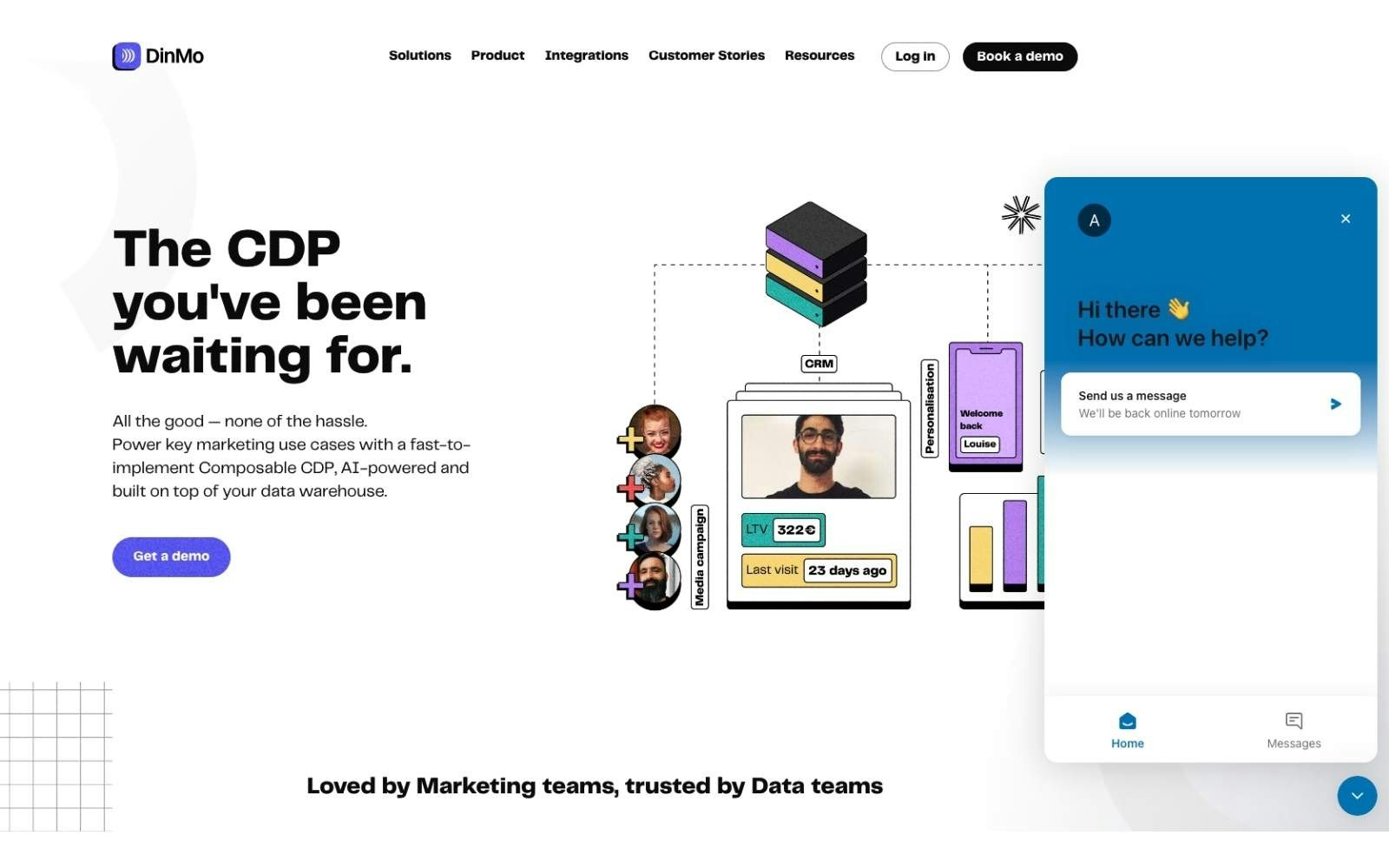
We have set up a chatbot accessible from the DinMo website homepage
2️⃣ Automate repetitive tasks
Machine learning algorithms make it possible to automate processes that previously required manual intervention, helping teams save time. Many tasks handled by teams can be streamlined with artificial intelligence, regardless of the function involved (data, marketing, support, etc.).
💡 By automating actions such as email sends, ad campaign management or data analysis, marketing teams can focus on higher-value activities.
Most data activation solutions also make it possible to synchronise highly targeted audiences at scale. Campaigns become more effective and operational costs are reduced thanks to the use of fresh, up-to-date data across tools.
3️⃣ Content generation: creating faster (and better) with AI
Generative AI has fundamentally transformed marketing content production. It makes it possible to create copy, visuals, infographics and even videos in just a few minutes, while significantly reducing production costs.
Tools such as ChatGPT Images, Midjourney or Nano Banana (Google) allow teams to produce high-quality visuals from a simple prompt, without advanced design skills.
AI can also speed up the creation of presentations, ad variations or multi-format content tailored to different channels (website, email, social media, ads, etc.). An AI presentation generator for free helps you boost productivity while reducing time and content creation costs.
Finally, by combining content generation with customer data, brands can adapt messaging to specific audiences and increase relevance, without multiplying resources.
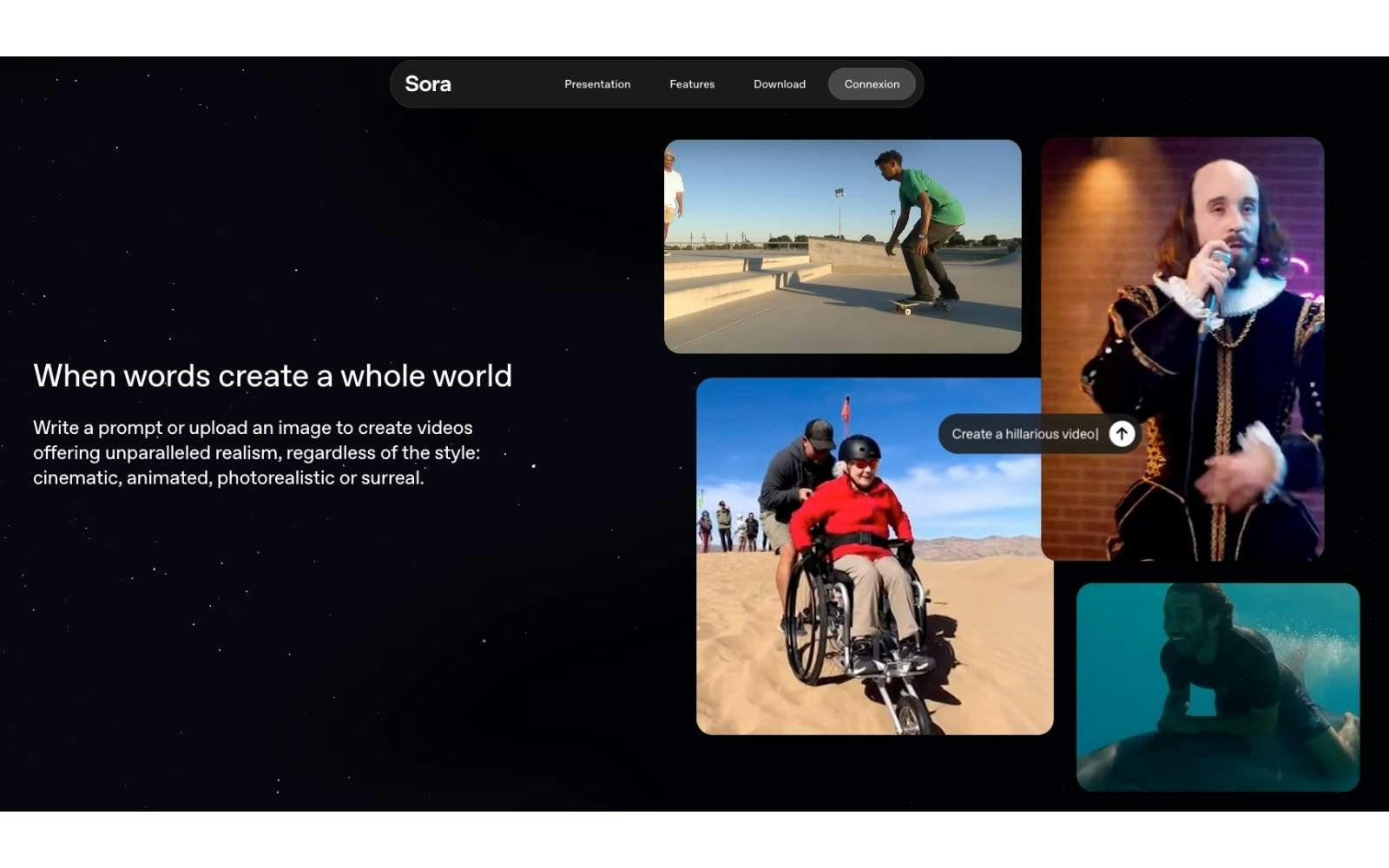
Creating videos with OpenAI’s Sora
4️⃣ Optimising marketing spend
Artificial intelligence also helps improve the management of marketing budgets, particularly in advertising.
Ad platforms already rely on algorithms that can adjust bids in real time based on available signals (performance, audiences, conversions, seasonality, etc.). For example, Google Ads uses AI to automate parts of bidding strategies and optimise budget allocation.
Of course, you can’t directly influence how these algorithms work internally. However, you do have a major lever: your data. By feeding platforms with as much reliable, high-quality data as possible (events, conversions, segments, first-party signals), you improve targeting accuracy and maximise your ROI.
Advanced use cases: real-time AI, personalisation and decisioning
5️⃣ Removing technical barriers to data usage and activation
Leveraging data across the entire customer journey delivers several benefits. It helps to:
Identify the most qualified leads (through lead scoring) and define sales strategies based on those scores.
Personalise product recommendations to drive cross-selling and/or upselling.
Detect customers at risk of churn and send them timely, relevant offers.
Reactivate inactive customers.
In many organisations, data has long been siloed, making it difficult for marketing teams to access and use effectively.

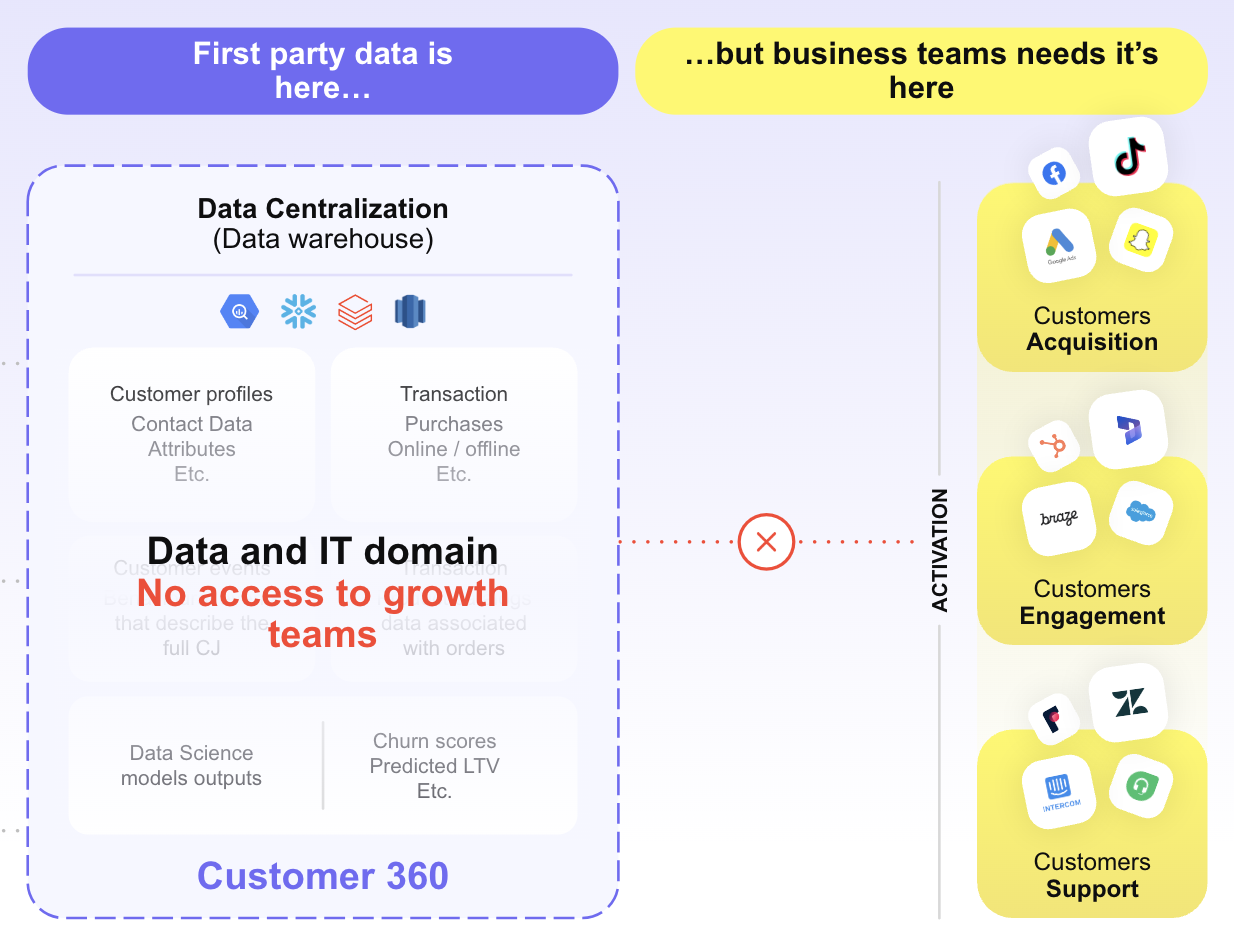
At DinMo, we believe data should not be used solely by data teams, but shared across the entire organisation.
In practice, many businesses still face a key challenge: turning large volumes of data into actionable insights takes time, skills and the right tools. Artificial intelligence can help bridge this gap by automating some of the most complex steps and making analysis more accessible.
For example, AI-powered platforms can automatically clean, organise and analyse data, then surface insights in an easy-to-understand format. This democratisation of data enables marketers to make data-driven decisions without relying on technical teams.
Our AI copilot, DAN, allows anyone to ask questions about marketing performance or recommended actions in natural language.
6️⃣ Predicting customer behaviour and reducing CAC
When it comes to optimising acquisition and retention, marketers need to answer two fundamental questions:
Which high-potential individuals should I focus my marketing budget on?
How should I engage each of them?
As you might expect, machine learning can now answer both questions with far greater accuracy than any manual analysis. It excels at processing large volumes of data to uncover patterns and trends that are nearly impossible for humans to detect.
For example, by analysing past purchase history and browsing behaviour, advanced machine learning models can:
Predict which products a customer is most likely to be interested in next.
Identify customers at risk of churn.
Estimate each customer’s potential lifetime value (CLV).
These insights enable businesses to anticipate customer needs and preferences more effectively.
Predictive AI therefore helps organisations refine their marketing strategies, ensuring they target the right customers with the most relevant products, offers and incentives at the optimal moment.
In addition, understanding a customer’s projected lifetime value makes it possible to optimise acquisition costs and ensure investments are aligned with long-term profitability.
Explore our customer case study with Kappa to see how customer segmentation and artificial intelligence can help optimise your marketing spend:
👇

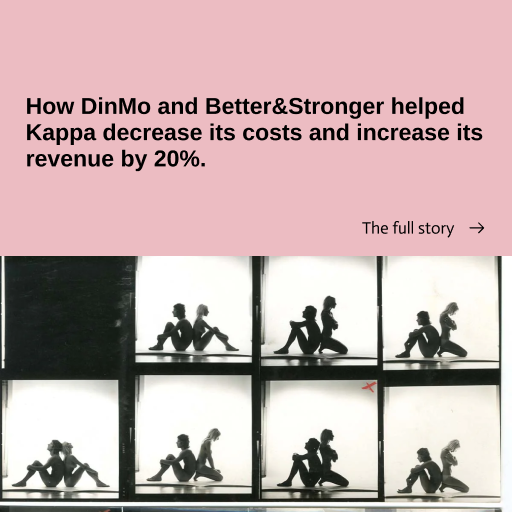
How Kappa uses AI for segmentation
7️⃣ Personalising the customer experience at scale
Personalisation has become a prerequisite for attracting and retaining customers. 8 out of 10 consumers say they are more likely to buy when a brand offers a personalised experience (Medallia).
Thanks to artificial intelligence, companies can tailor messages and offers at scale without creating hundreds of separate campaigns. AI can, for example, generate personalised product recommendations, deliver dynamic content on websites, or adjust email follow-ups based on user behaviour.
Another key benefit is better control of marketing pressure. A low-engagement customer should not be approached in the same way as a loyal one.
To deliver results, personalisation must be built on reliable, up-to-date customer data. A Customer Data Platform (CDP) makes it possible to centralise this data, build segments and activate audiences on the right channels.
8️⃣ Moving to real-time marketing (intent detection + immediate activation)
One of AI’s major contributions to marketing is the ability to act at the right moment. Purchase intent can last just a few minutes. If you respond too late, the opportunity is often lost.
Real-time marketing involves detecting signals (product views, cart abandonment, declining engagement, customer service requests, etc.) and triggering an immediate action: a personalised follow-up, a recommendation, exclusion from a campaign, or a reassurance message.
AI also helps prioritise events to avoid 'over-triggering' and overwhelming users.
For these campaigns to be effective, data needs to be fresh and readily activatable across marketing tools. This is where a data activation approach (audiences, CRM, ads) becomes a real ROI driver.
9️⃣ Automating marketing decisions: AI decisioning and agentic marketing
The marketer’s main challenge is making the right decisions continuously. Autonomous AI agents can determine who to target, when, on which channel and with which message. This is known as AI decisioning.
In practice, AI can recommend the Next Best Action (NBA) or the Next Best Offer (NBO) based on a customer’s profile, history and campaign performance. For example, targeted retention campaigns or personalised promotions can be designed to address the specific reasons behind potential disengagement.
This approach improves marketing efficiency and increases conversion rates.
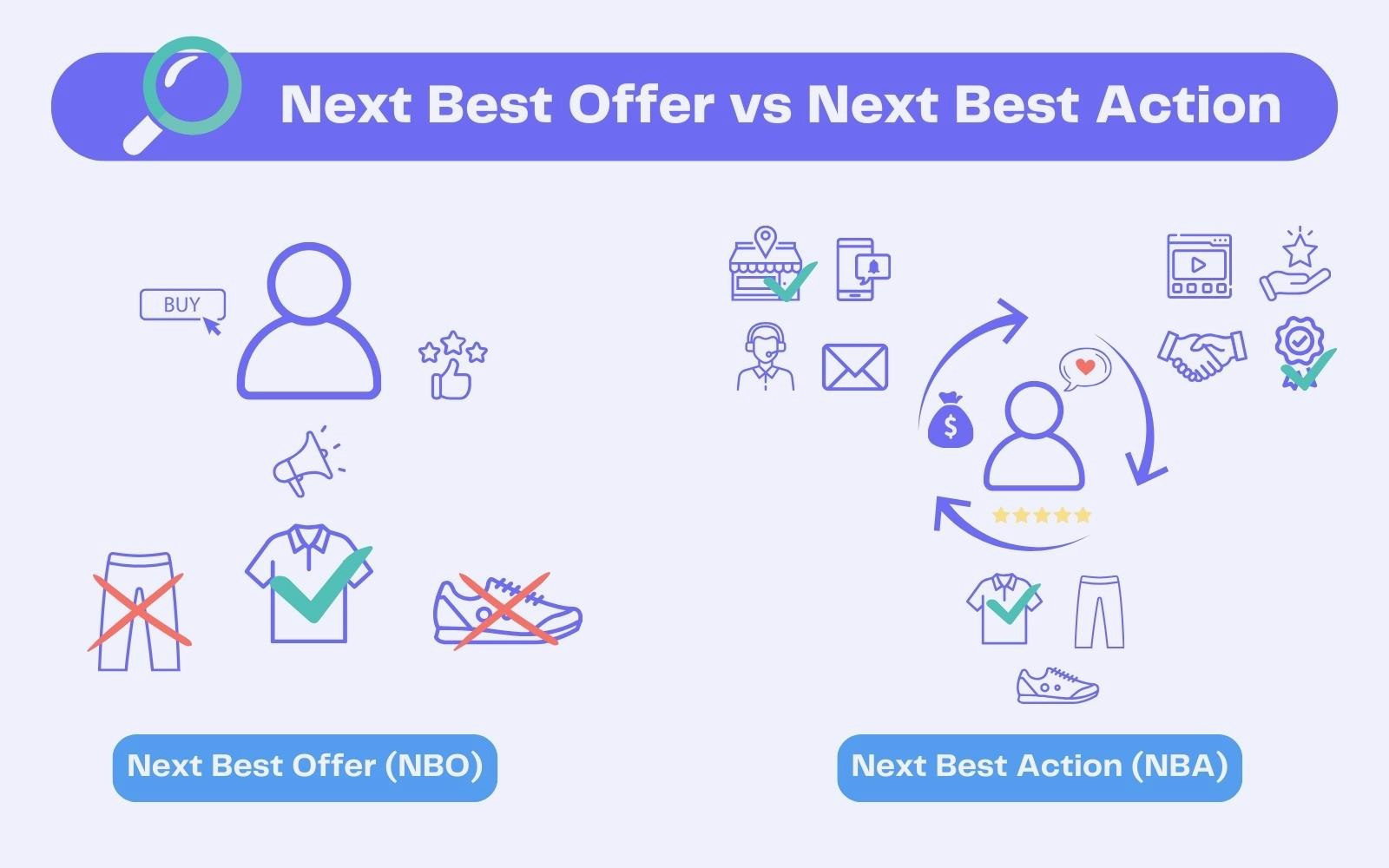
The differences between Next Best Offer and Next Best Action
Agentic marketing also makes it possible to orchestrate optimisations under human oversight: adjusting segments, pausing a campaign if costs spike, or reallocating budget based on performance.
How to maximise the impact of AI on your marketing
Best practices
Start with quick-ROI use cases. Prioritise two or three concrete areas (e.g. personalisation, campaign optimisation, scoring) and define from the outset what you want to improve.
Define the right KPIs. Measure impact using business metrics (conversion rate, CAC, average order value, retention, LTV) before focusing on more “technical” indicators.
Rely on reliable, activatable data. AI is only effective if your customer data is up to date, consistent and accessible within the right marketing tools.
Stay in control (privacy and security). Favour a governed approach: consent management, access controls, usage traceability and compliance with regulatory requirements.
Scale with a continuous improvement mindset. Test, compare and iterate. The best results rarely come from a single “big AI project”, but from ongoing, incremental optimisation.
Build or buy? Why choose external solutions?
Implementing AI technologies within your organisation can deliver significant gains in customer engagement, operational efficiency and marketing performance. However, building these tools in-house can be extremely complex, time-consuming and costly.
Developing and deploying AI technologies comes with several challenges, including:
Technical complexity: building sophisticated AI models and integrating them into existing systems requires deep expertise in machine learning, data science and software engineering.
Resource requirements: developing AI solutions from scratch demands substantial resources, computing power and time. Ongoing development and maintenance also require a dedicated technical team.
Rapid evolution: the AI landscape is evolving fast, with major advances in algorithms and technologies every month. Keeping pace requires constant updates and expertise that is difficult to sustain internally.
Leveraging specialised solutions: Customer Data Platforms (CDPs)
To overcome these challenges, specialised external solutions are available. Most Customer Data Platforms (CDPs) now help automate repetitive business tasks, enrich the customer view with predictive attributes, and identify the most relevant marketing actions to take.
CDPs are designed to integrate, analyse and activate customer data efficiently. Many of them offer AI-powered capabilities without the need for in-house development.
That said, traditional CDPs have not fully convinced all organisations, often due to long implementation timelines and a return on investment perceived as too limited.
Recent developments in the MarTech ecosystem have also led to the rise of the Modern Data Stack, built on modular, cloud-based technologies. At the core of this architecture sits the data warehouse.
The Modern Data Stack represents a major shift in how companies manage and use their data. Rather than relying on all-in-one solutions, the trend is moving towards highly customisable data architectures.
For greater flexibility and adaptability, organisations can build their own best-of-breed setup tailored to their specific needs. This is precisely the principle behind a composable CDP.

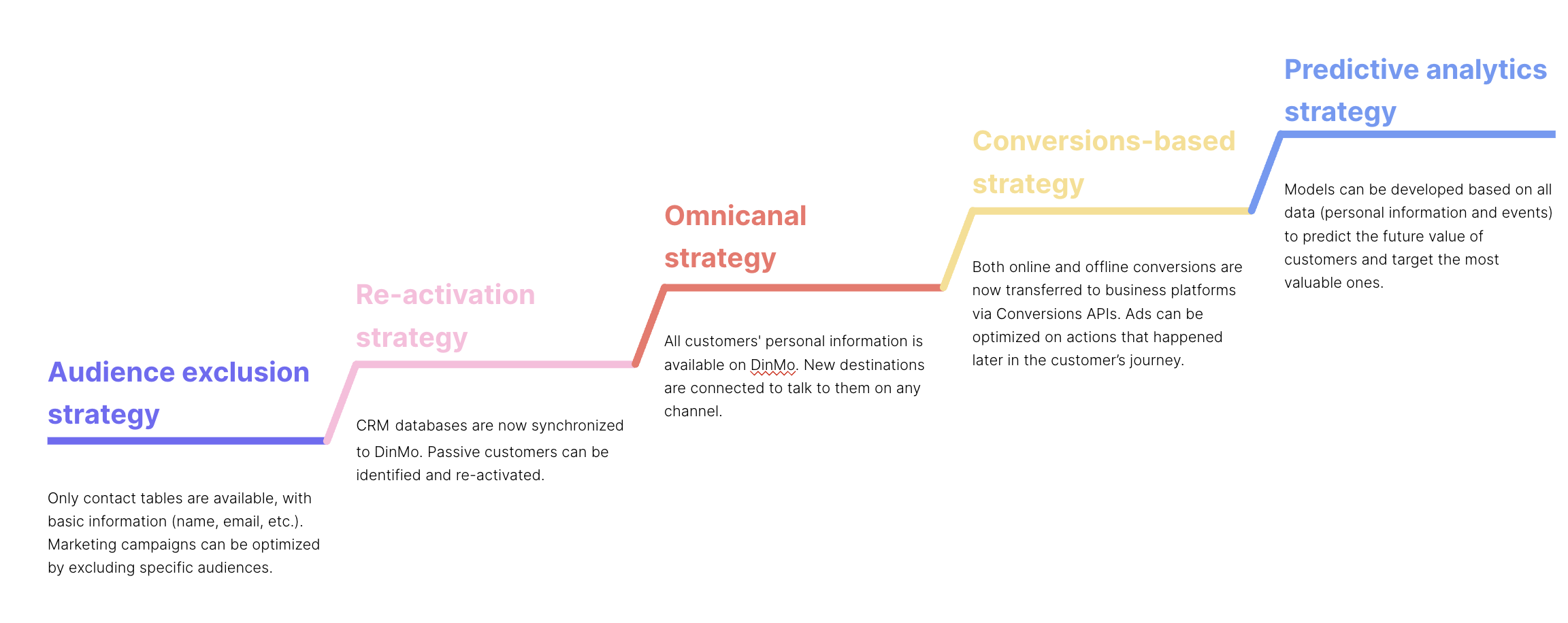
Composable CDP: A Modular Approach
🌟 DinMo is a composable CDP built on a company’s data warehouse and powered by Reverse ETL technology to activate customer data across marketing tools. Our platform offers advanced AI capabilities to better understand customer behaviour and support use cases such as advanced segmentation and prediction.
Thanks to its no-code features, data and marketing teams can access warehouse data and activate it directly within their tools (CRM, support, advertising platforms, email marketing, etc.). The goal is to make more complete, fresher customer data available in the tools teams already use every day, in order to personalise campaigns and better measure their impact.
Conclusion
Integrating AI into marketing practices delivers a wide range of benefits, from behaviour prediction and customer relationship personalisation to removing technical barriers to data usage.
As artificial intelligence continues to advance, its impact will only grow, equipping marketing teams with powerful tools to engage customers more precisely. The future of marketing lies in a seamless integration of AI in support of business objectives.
DinMo is trusted by leading brands such as Kappa, Huel, Ankorstore, Interflora, and Krüger. With our CDP, they synchronise billions of customer data points and audiences to their destinations every year.
Our platform provides the insights they need to stay ahead in a competitive market. Find out how DinMo can transform your data strategy by getting in touch with us! 🚀