

The DPO’s role in data management and processing
6min • Last updated on Feb 13, 2026


Olivier Renard
Content & SEO Manager
The protection of personal data has become a core priority for organisations since the introduction of the GDPR. At the heart of this framework sits the DPO (Data Protection Officer), responsible for ensuring compliance with data protection regulations and supporting teams in their day-to-day activities.
As marketing tools multiply and customer data volumes increase, the stakes are rising for brands. It is no longer just about documenting compliance obligations, but about understanding how data flows across systems, where it is stored, and how it is used.
Key Takeaways:
The DPO is responsible for ensuring compliance with regulations governing the processing of personal data. They act as the primary point of contact for teams on GDPR-related matters.
Beyond the legal dimension, the role also covers how data is managed and circulated across the organisation, at the intersection of data and business operations.
The proliferation of tools and data duplication makes governance more complex and expands the scope of compliance.
Data architecture choices (CDPs, data warehouses, etc.) have a direct impact on data protection responsibilities and processes.
🔎 What exactly is the role of a DPO, what does their remit cover, and how do data management challenges evolve within a modern data stack? Discover how a zero-copy architecture can help ensure compliance with current regulations. 👌
What is a DPO (Data Protection Officer)?
The DPO, or Data Protection Officer, is a role defined by the GDPR since its entry into force in 2018.
They support the organisation in managing personal data and ensure compliance with the regulatory framework.
Their mission goes beyond administrative oversight. The DPO acts both as an internal reference point and as an external contact for all matters related to data processing. They work closely with business teams, senior management and technical stakeholders.
Role within an organisation
The DPO is responsible for overseeing practices related to personal data. In practical terms, they inform and advise the organisation on its obligations, while ensuring that applicable regulations are properly implemented.
They cooperate with the supervisory authority (in the UK, the Information Commissioner’s Office – ICO) and are involved at an early stage in projects. The role is cross-functional, covering both legal considerations and the operational use of data across the business.
Key responsibilities
The DPO plays a structuring role within the organisation. They contribute to:
Developing an internal culture of data protection
Ensuring that processing activities comply with the GDPR
Overseeing initiatives involving personal data
Acting as a point of contact with the supervisory authority
Their objective is to reduce risks related to data processing and strengthen overall data governance. The DPO must operate independently and have access to the highest level of management.
When is a DPO required?
The GDPR sets out several situations in which appointing a DPO is mandatory. This includes:
Public authorities and bodies,
Organisations whose core activities involve regular and systematic monitoring,
Entities processing sensitive data on a large scale.
Depending on the context, the DPO may be an internal appointment, outsourced to a specialist provider, or shared between several entities (Article 37(2) of the GDPR).
Even where it is not legally required, appointing a DPO is strongly recommended. It helps ensure robust data governance and strengthens the organisation’s compliance framework.

Personal data protection
Customer data: a central concern for the DPO
Customer data now plays a strategic role within organisations. It underpins customer insight, personalisation, performance measurement and marketing decision-making.
As channels and use cases continue to diversify, data flows across multiple environments. These may include the CRM, tracking tools, marketing activation platforms, social networks, or even physical points of sale.
Every interaction becomes a potential data source, and every tool an additional point of processing.
Growing use cases and multiplying collection points
This evolution has led to a proliferation of data flows. Organisations collect, transform and activate customer data across increasingly complex technology stacks.
The same data may be used for analytics, customer segmentation, technical support or engagement platforms. Managing these flows becomes a key concern for the DPO.

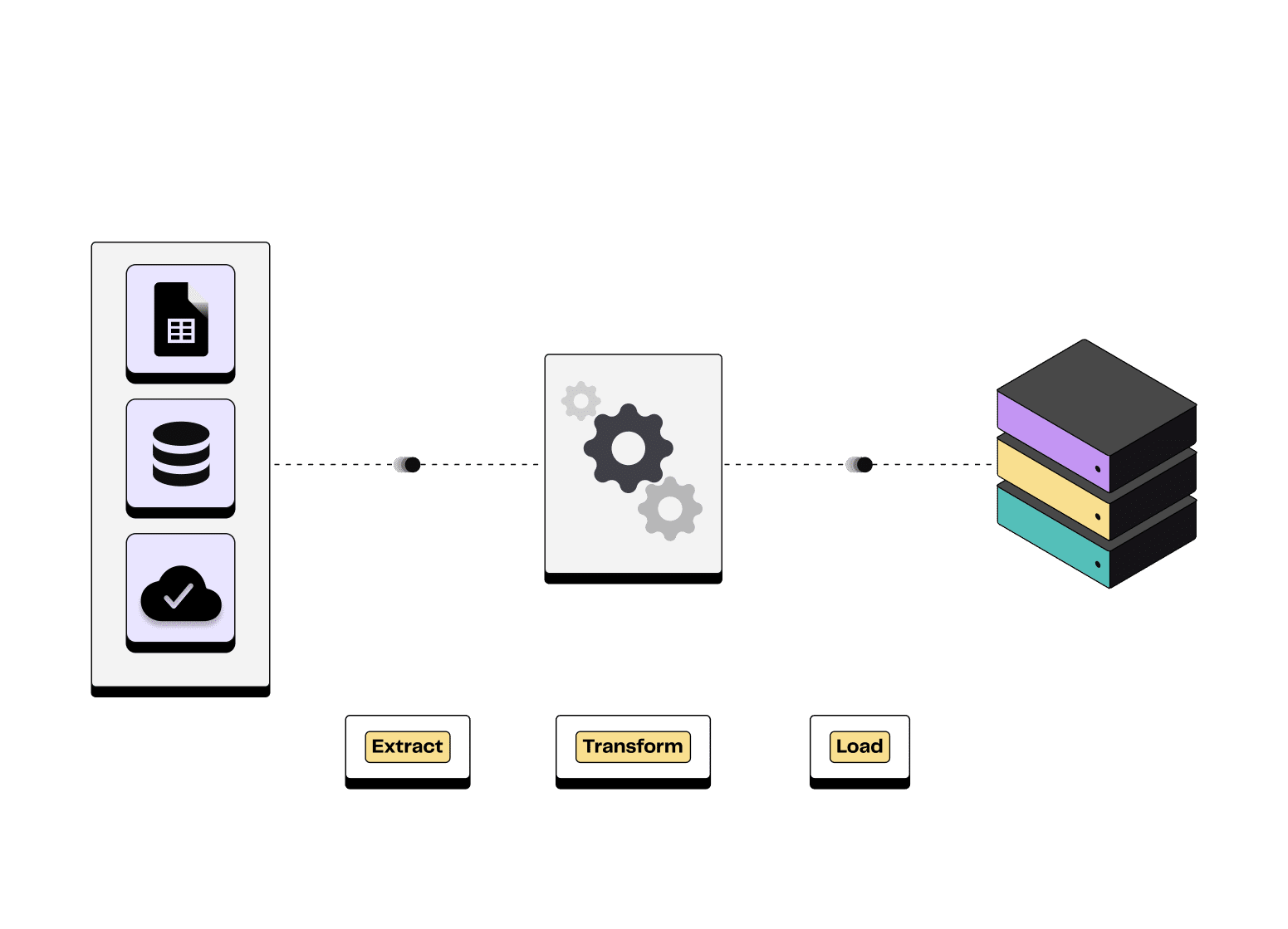
Extract Transform Load process illustration
Specific challenges
Customer data has characteristics that heighten its sensitivity. It is directly linked to individuals, shared across multiple teams, and often high in volume.
The presence of personal data and identifiers (PII) requires a strict governance framework. Robust oversight and control of data usage are essential before activating it across multiple channels.
Marketing stack: when complexity becomes a risk
On average, companies use more than 100 business applications on a daily basis (BetterCloud). Specialised SaaS tools, activation platforms and business intelligence solutions each address specific needs, but they also add complexity.
Data may be copied between systems, exported as files, stored in intermediate databases or synchronised through pipelines. This fragmentation has direct implications for the DPO.
Each additional storage location introduces new requirements in terms of security, retention and access rights. The result is a broader compliance scope, more complex governance and greater difficulty in maintaining a consistent single source of truth.
Beyond legal considerations, this issue is closely linked to tool selection and overall data architecture.

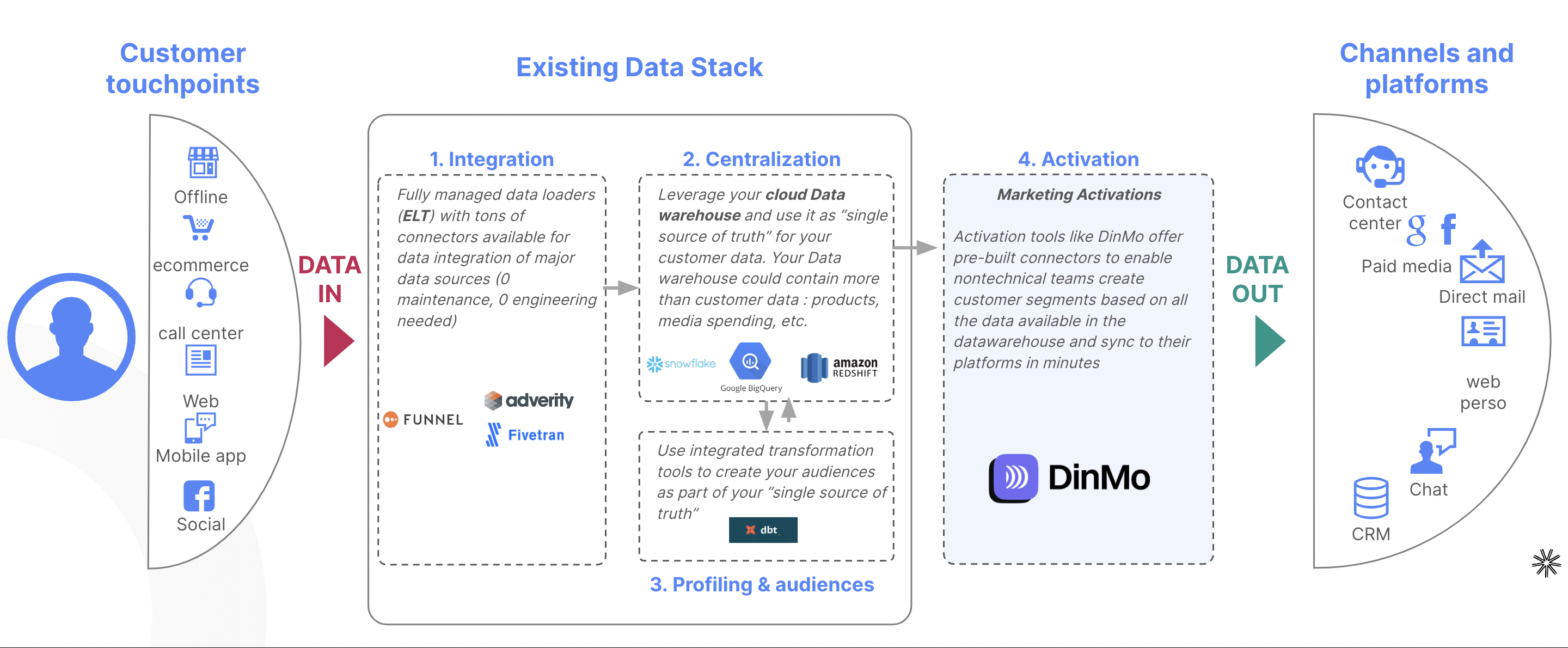
How you can leverage DinMo to transform your Existing Modern Data Stack into a Modular CDP
CDPs and compliance: what impact?
Discussions around Customer Data Platforms (CDPs) often focus on business features. However, the impact of the underlying technical architecture on the management of personal data is a key factor to consider when making your choice.
Many traditional CDPs now promote a so-called “no-copy” approach. In practice, the reality is more nuanced: simply connecting to a data warehouse does not automatically mean that duplication is avoided.
Customer profiles, attributes or certain events may still be replicated into the CDP’s own database. This introduces an additional layer of data storage, with its own governance and security requirements, effectively expanding the DPO’s compliance perimeter.
The composable, privacy-by-design approach
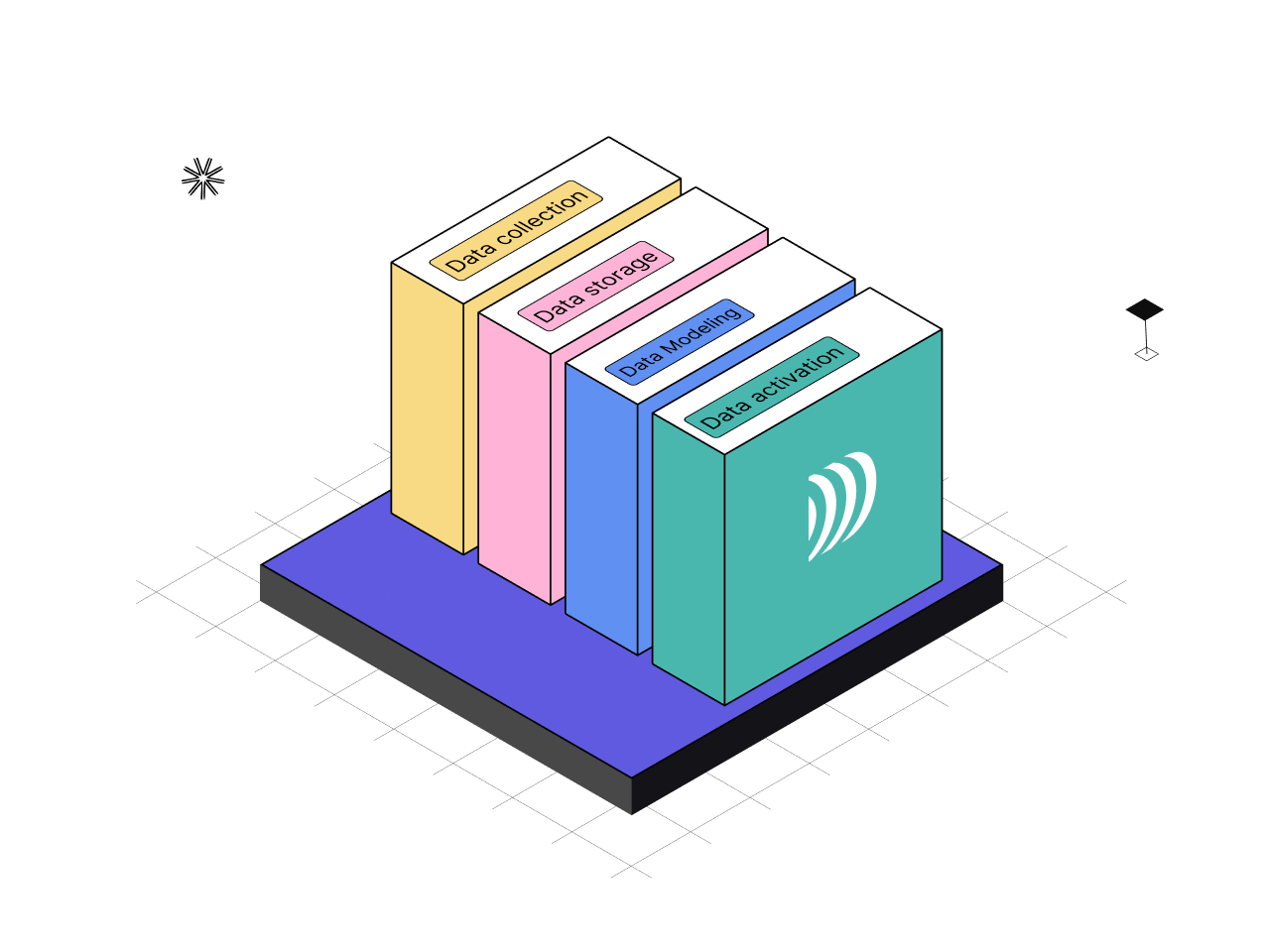
A composable (or warehouse-native) CDP is built on a different principle. It relies on the company’s data warehouse as the central layer where data is stored, transformed and activated.
This reflects a genuine zero-copy, privacy-by-design architecture. Data never leaves its secure environment, and no parallel storage is created.
For the DPO, the benefits are immediate. The scope of control is clearer, data flows are easier to trace, and governance is significantly simplified.

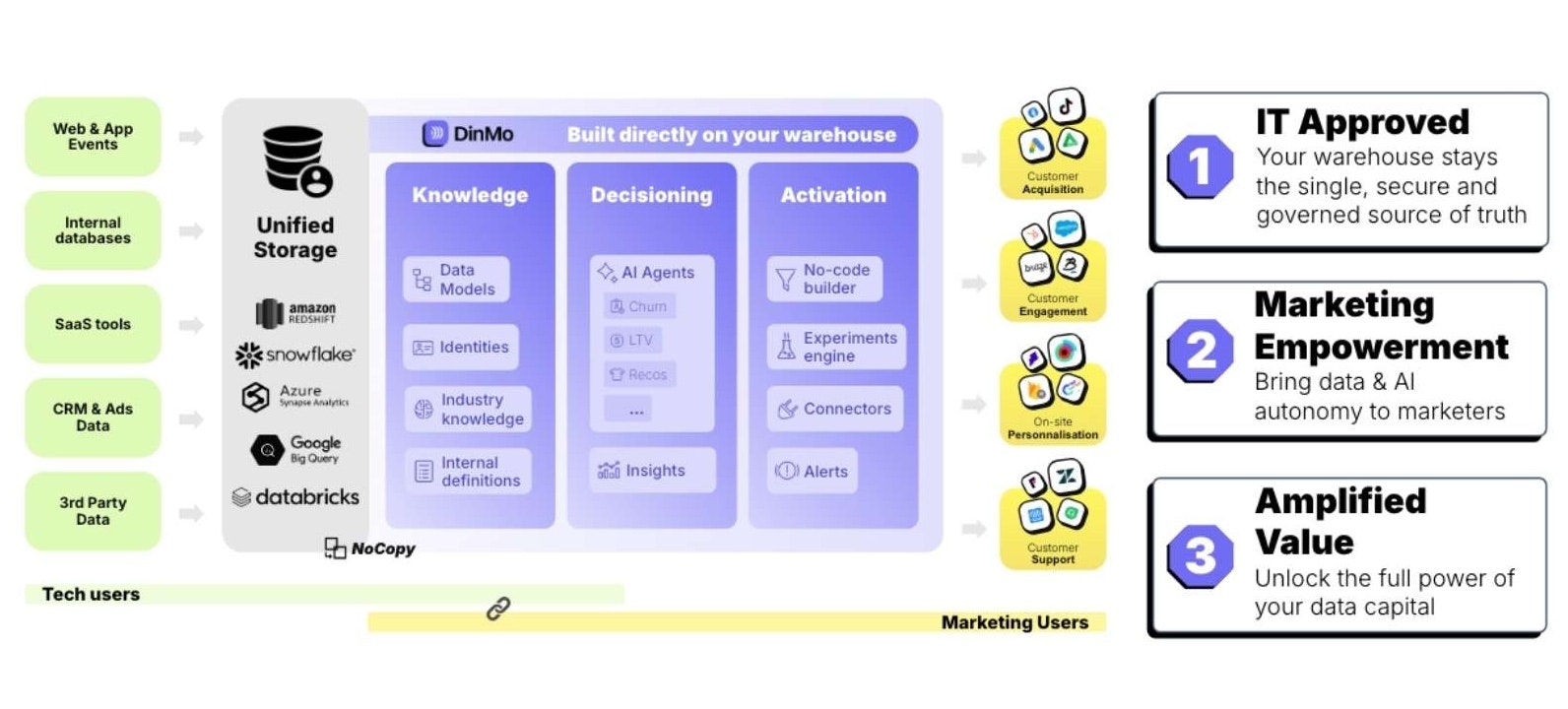
Turning data & AI into everyday marketing tools
The DPO as a bridge between data, marketing and compliance
Sometimes perceived as restrictive, the DPO’s role is first and foremost to support and secure the use of data. Their involvement helps guide the decisions made by the data controller.
They raise awareness among teams, contribute to maintaining records of processing activities, and ensure compliance with GDPR principles. In marketing-related matters, they may assess the impact of alternatives to third-party cookies.
They also provide guidance on specific decisions, for example regarding how data should be activated. This includes evaluating alternatives to third-party cookies and tracking mechanisms:
Is consent required?
What data is genuinely necessary?
Where is it stored?
Who has access to it?
What are the risks for users?
Close collaboration between data, marketing and the DPO strengthens regulatory compliance. It helps balance innovation, performance and the responsible use of data.
Conclusion
The DPO is a cross-functional role that goes far beyond legal considerations alone. It sits at the heart of governance matters, particularly when an organisation collects, processes and activates customer data at scale.
In this context, architectural choices matter just as much as processes. A stack that multiplies data copies makes personal data management significantly more complex over time. Conversely, a modular approach simplifies compliance.
Strong governance also depends on a modern, well-designed data stack. Discover how a warehouse-native architecture supports both data protection and activation.
FAQ
Is the DPO a full-time role?
Is the DPO a full-time role?
Not necessarily. In large organisations, or where data processing activities are numerous and complex, the role is often full-time.
In other organisations, it may be carried out by an existing employee or outsourced to an external DPO. What matters most is having the availability, expertise and independence required to fulfil the role effectively.
Are specific qualifications required to act as a DPO?
Are specific qualifications required to act as a DPO?
The GDPR does not mandate a specific degree, although certified training programmes do exist. A DPO should have a solid understanding of data protection law, IT and information security.
Legal, compliance or cybersecurity backgrounds are common. In practice, hands-on experience, the ability to work closely with business teams and ongoing regulatory awareness are often more important than a strictly academic background.
Is the DPO involved in decisions related to the data stack?
Is the DPO involved in decisions related to the data stack?
The DPO primarily plays an advisory and risk assessment role. They do not select tools directly, but assess their implications in terms of personal data, security and governance.
They may therefore be consulted on key decisions, such as adopting a CDP or a tracking solution, in order to anticipate regulatory impacts.