

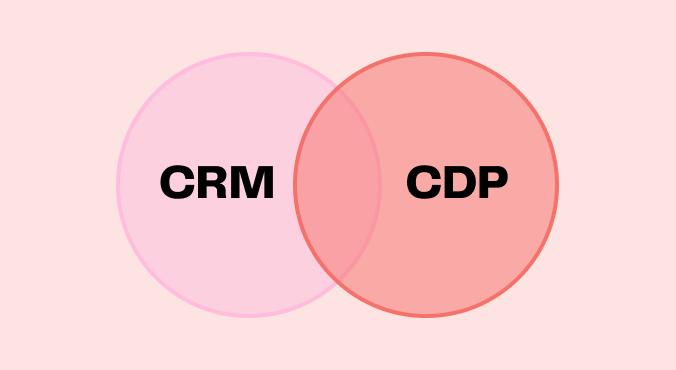
Main differences between CDP and CRM
7min • Last updated on Jul 29, 2026


Alexandra Augusti
Chief of Staff
Customer data sits at the heart of any effective marketing strategy. It plays a critical role in:
gaining a deeper understanding of prospects and customers,
personalising offers and communications,
optimising campaigns.
The question is how to collect, store, analyse and activate that data effectively.
Key takeaways:
CRM (Customer Relationship Management) and CDP (Customer Data Platform) are two solutions companies use to manage customer data.
While they share some similarities, they also differ in important ways. A CRM is used to manage the customer relationship, whereas a CDP centralises and unifies richer data.
The two tools are complementary: the CRM structures sales/support processes, while the CDP provides a 360° view and boosts omnichannel marketing effectiveness.
👉 This article summarises the similarities and, above all, the differences between CRMs and CDPs. Discover how they complement each other and choose the right tool for your needs. 🔍
CRM and CDP: definitions
What is a CRM?
CRM, or Customer Relationship Management, is software designed to optimise interactions with customers and prospects at every stage of their relationship with the business. It centralises a range of information, including:
Customer, prospect and partner details in a single database (phone number, email address, company, etc.)
Details of a customer’s communications with the business, including the date and time
Next steps that have already been scheduled
Its main benefits include:
Compiling and tracking interactions relating to contacts, sales opportunities, quotes and agreements
Automating sales-, marketing- and customer support-related tasks such as automatic data entry, email campaign deployment and calendar management
Measuring and analysing key performance indicators (KPIs) such as conversion rate, revenue and customer satisfaction
Using a CRM improves the quality of commercial relationships and typically helps centralise and automate communications. It is particularly useful for sales, marketing and customer service teams.
What is a Customer Data Platform?
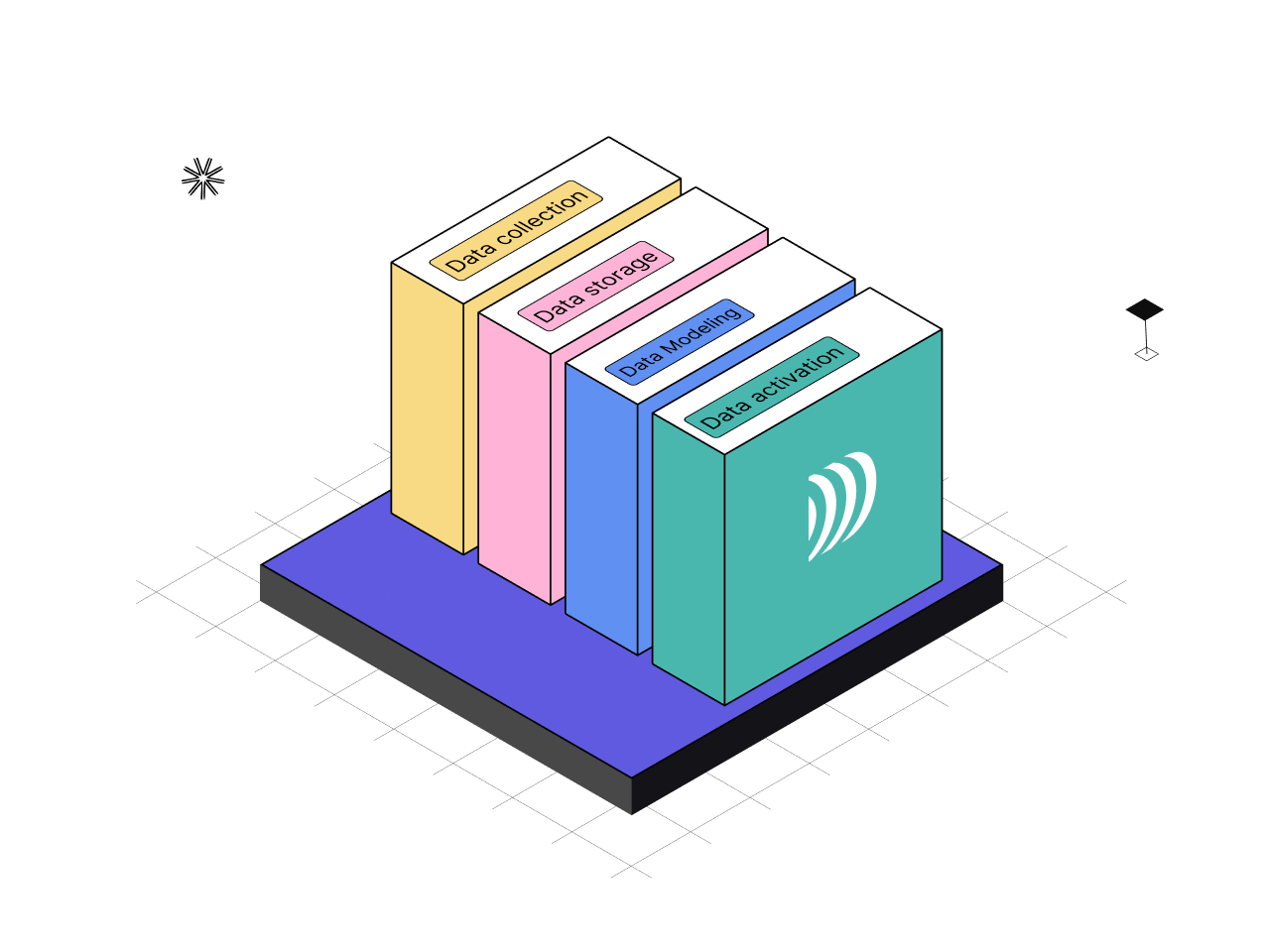
A CDP, or Customer Data Platform, is a solution that aggregates, cleans and harmonises customer data from multiple sources (including CRMs) into a unified database. It enables the creation of detailed customer profiles with a 360° view.
It turns raw data into a coherent picture of your audience across all channels. These profiles are then made available to the different teams that may need them (sales, marketing, support, etc.).
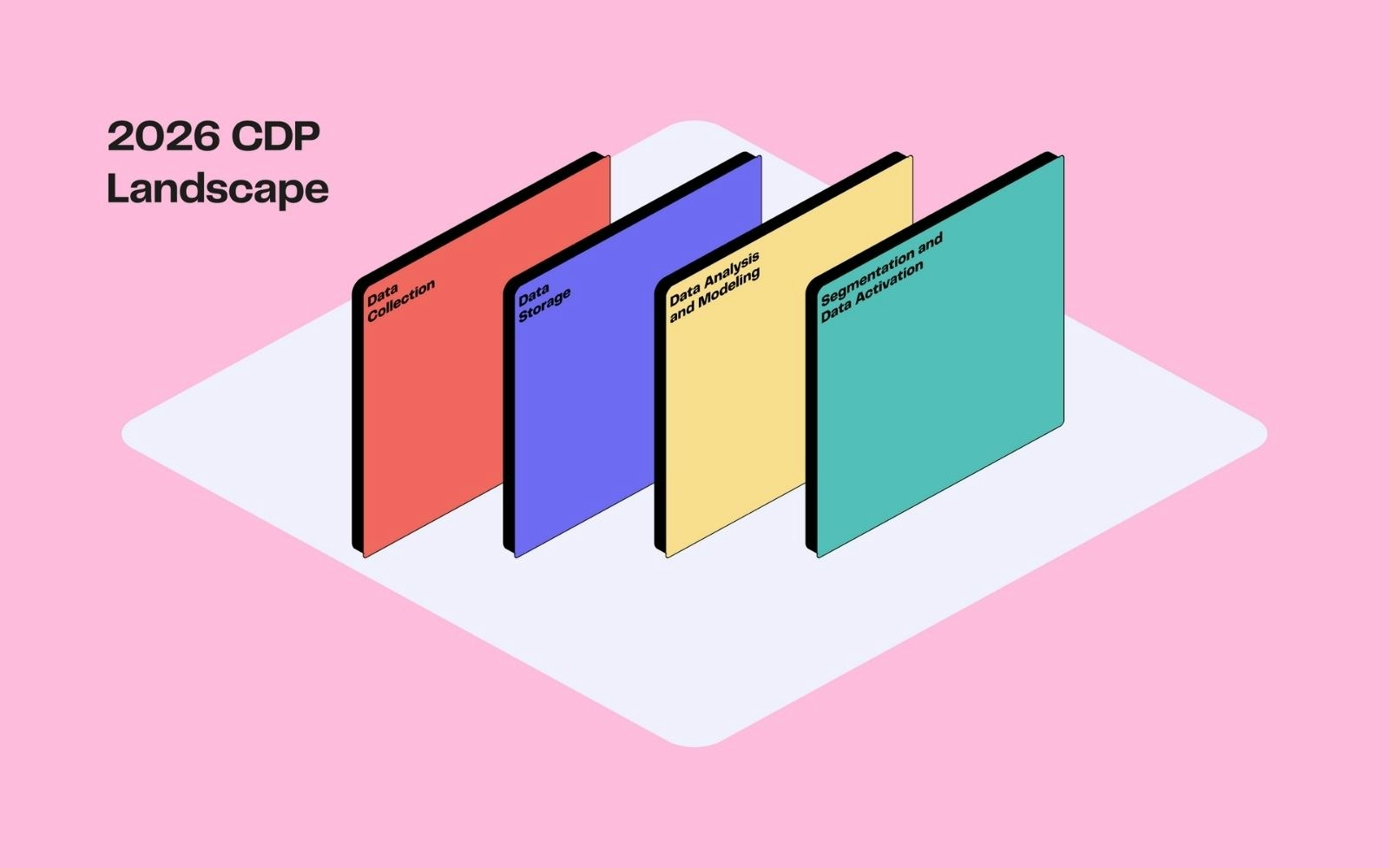
CDPs are used to collect, clean, ensure compliance for, unify and activate data within an organisation.

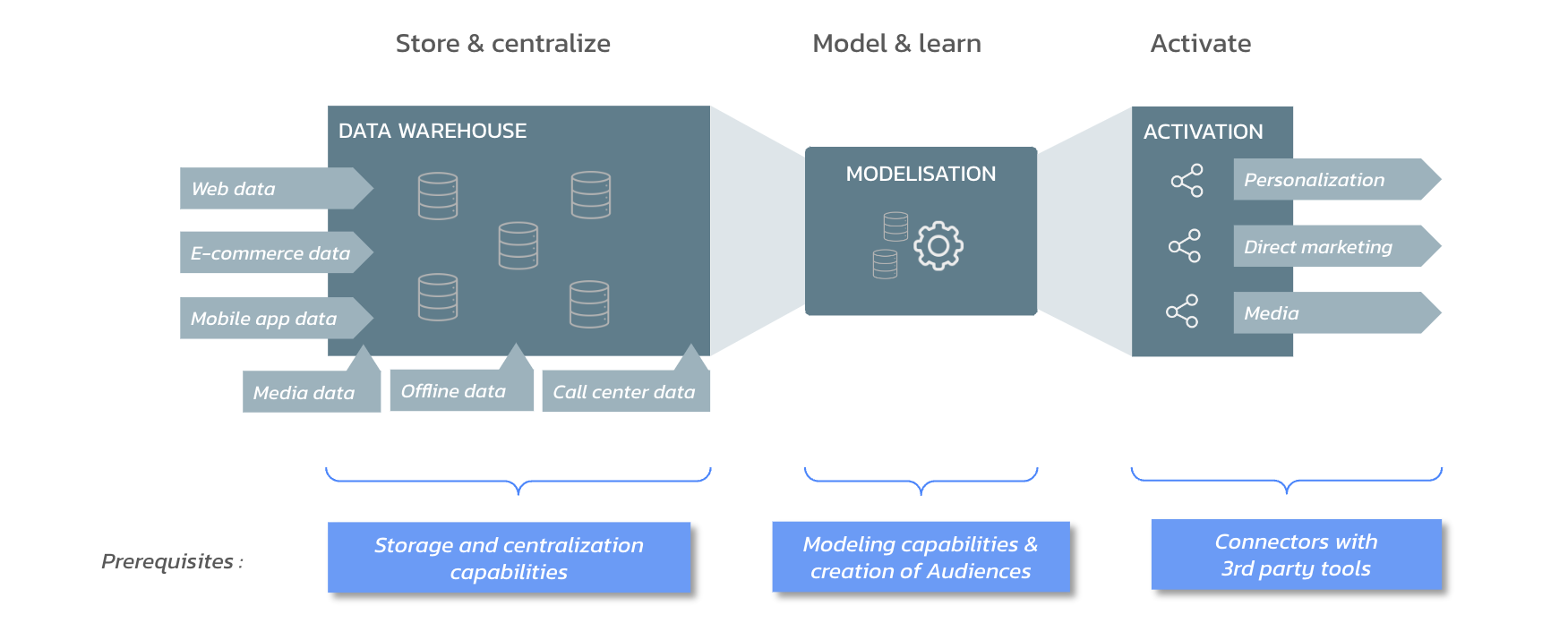
Schematic diagram of a CDP
Download our dedicated guide to learn more.
👇

Everything you need to know about CDPs
Types of data managed
One of the key differences between a CRM and a CDP lies in the types of data each handles and how that data is managed.
Operational data and actions in a CRM
A CRM focuses on managing operational data, meaning information related to customer and prospect interactions, transactions and activities with the business. This structured, identified data makes it possible to track the customer journey from first contact through to retention.
Here are some examples of data managed by a CRM:
Contact information (first name, last name, email, phone number, etc.)
Sales opportunities (pipeline stage, value, expected close date)
Quotes and contracts (reference number, amount, duration, etc.)
Customer interactions (calls, emails, meetings)
Customer service tickets (ticket ID, subject, status)
However, this operational data does not provide a complete understanding of customer behaviours, needs and preferences. It is often limited to a specific channel or department and does not capture the full scope of customer interactions with the brand.
Unified and persistent data in a CDP
By contrast, a CDP handles more diverse, rich, and comprehensive data that go beyond operational data alone. It brings together zero- and first-party data (collected directly from customers), as well as second- and third-party data (sourced from partners or external providers).


Zero vs First vs Second vs Third party data
In addition, a CDP handles anonymous data alongside personally identifiable information such as names, email addresses or phone numbers. Examples of data stored in a CDP include:
Profile information (identity, contact details, demographic attributes)
Behavioural data (browsing history, searches, purchases, etc.)
Transactional data (basket details, invoices, payments)
Offline data (in-store visits, phone calls)
Product information (catalogue, inventory, pricing, etc.)
This data is standardised and unified to create a single, continuously updated customer record. This comprehensive profile provides a 360° view of the customer, enabling the personalisation of offers, messages and experiences based on their specific needs and expectations.


Customer 360, centralising all customer data
Integration within the technological stack
Compatibility with the existing technology environment is a key factor to consider. This involves assessing how well each system can connect with the other tools used across the organisation.
The CRM and its interactions with sales and customer service tools
A CRM makes it easier to integrate with sales and customer service tools, such as solutions for managing quotes, contracts, invoices and support tickets. It also connects with marketing solutions, including email marketing tools, landing page builders and social media management platforms.
However, a CRM has limitations when it comes to integrating data from diverse and complex sources, such as behavioural, transactional, offline or product data. Likewise, a CRM does not handle anonymous or unidentified data, such as data generated by cookies, pixels or device identifiers.
The CDP as a central data layer across all customer touchpoints
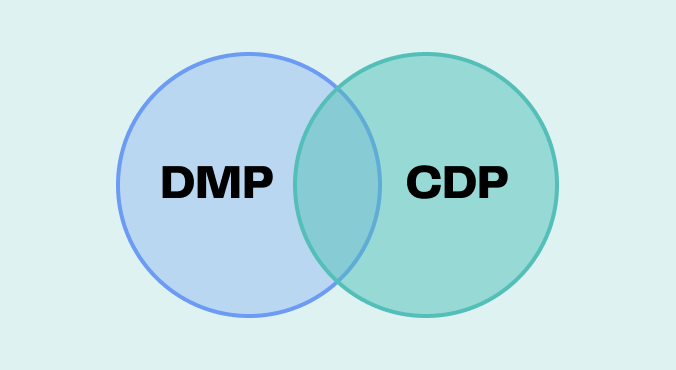
A CDP covers both online and offline interactions, whether identified or anonymous, structured or unstructured. It is compatible with a wide range of systems, including CRMs, DMPs (Data Management Platforms), CEPs (Customer Engagement Platforms), as well as analytics, personalisation and recommendation tools.
Thanks to these integrations, a CDP can collect, unify and activate customer data at scale, delivering a consistent and customised experience across all communication channels.

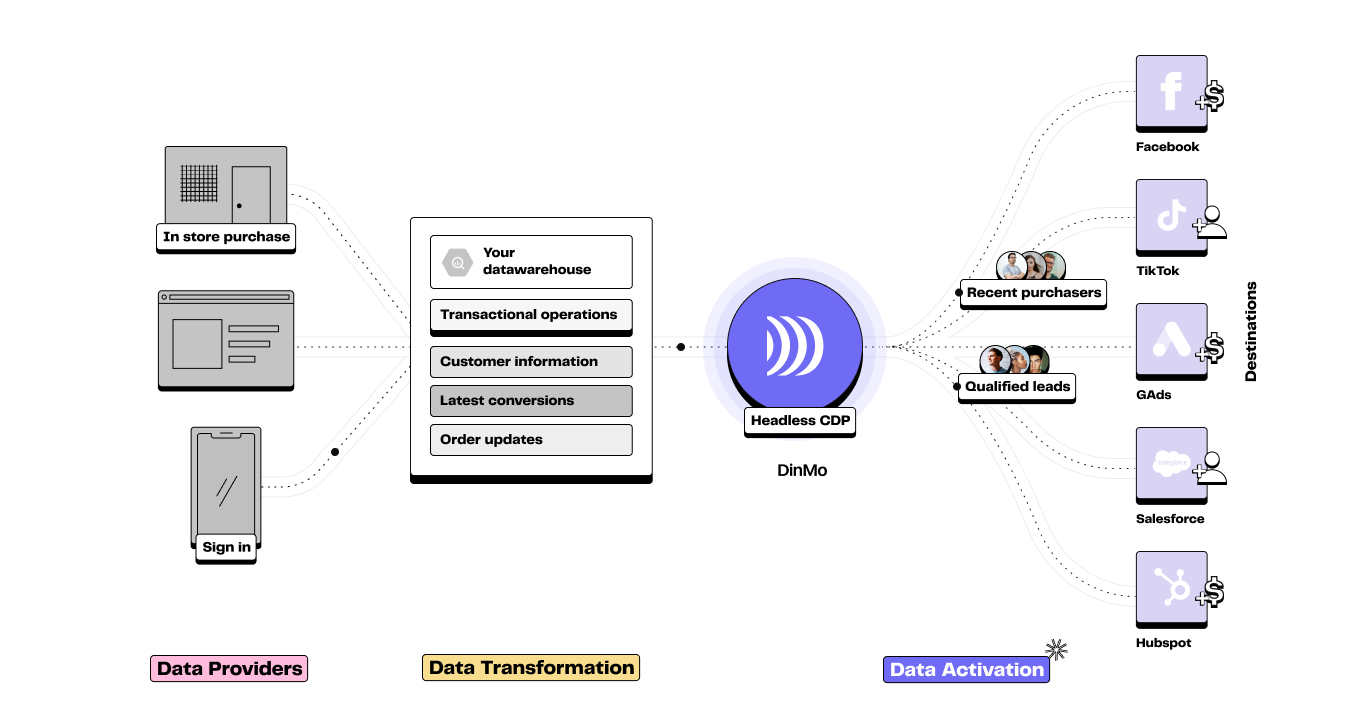
Data Activation
Data accessibility and usage
Another key difference between the two types of platforms is how quickly users can access and update data.
Real-time data access and updates in a CDP
A CDP stands out for its ability to provide real-time access to data and real-time updates. This ensures customer information is always up to date and relevant. The CDP pulls data from multiple sources, unifies it and stores it in a central database that updates automatically. As a result, customer profiles remain continuously refreshed, reflecting their latest interactions, transactions and behaviours.
In addition, a CDP makes it easier to access and use data across different tools without requiring deep technical expertise. Users can segment audiences, personalise content, launch marketing campaigns and more.
They can also export this data to other systems, such as analytics and personalisation tools, to further enhance the customer experience.
Limitations on access to historical and real-time data in a CRM
A CRM, by contrast, comes with certain limitations around data access and updates, which can impact the quality and relevance of customer information.
Using data effectively in a CRM requires advanced technical skills, which limits how easily business teams can make use of it. Building audience segments or running marketing campaigns typically depends on IT and data teams, a process that can be complex and time-consuming.
Impact on marketing strategy
Implementing a CRM and a CDP shapes a company’s marketing strategy. The aim is to improve the customer experience and personalise marketing campaigns.
Enhancing the customer experience with a CRM
A CRM is a powerful tool for improving the customer experience by making interactions more efficient and personalised at every stage of the journey. It helps you:
Clearly identify the expectations, needs and challenges of customers and prospects through the collection of operational data.
Deliver tailored solutions, supported by the automation of sales, marketing and customer service processes.
Build trust and strengthen relationships with customers and prospects through tracking and analysing interactions.
Increase loyalty and maximise customer lifetime value (LTV) by improving satisfaction and retention.
⚠️ However, a CRM alone is not enough to deliver a consistent, personalised experience across all channels and touchpoints, as it does not incorporate data from other sources. This may include online activity, transactions, offline interactions or product information. It also does not enable you to activate your data in third-party tools.
Marketing personalisation and precision with a CDP
A CDP, by contrast, excels at customisation and improving the precision of marketing campaigns. The range of use cases enabled by a CDP is broad, but in practice it allows you to:
Build a deep understanding of customer and prospect behaviour, needs and preferences using unified data.
Create targeted, relevant audience segments through more advanced segmentation and analysis.
Tailor offers, messaging and experiences by activating data across marketing, sales, customer service and analytics tools.
Measure and improve marketing performance with real-time data and analytics reporting.
A Customer Data Platform therefore makes it easier to implement a personalised, precise marketing strategy. It enables consistent, tailored customer experiences across all channels and touchpoints by leveraging data from a wide range of sources.
Which solution for which need?
Choosing between a CRM and a CDP depends on a range of factors, including your objectives, budget, industry and company size. While there is no one-size-fits-all answer, a few key considerations can help guide your decision.
It is also worth noting that a company can absolutely use both a CRM and a CDP. In fact, this is often recommended to fully leverage the strengths of each tool!
When to prioritise a CRM
Choose a CRM (Customer Relationship Management) if your goal is to:
Improve the management of interactions with customers and prospects across their entire lifecycle.
Automate sales, marketing and customer service processes.
Foster collaboration across teams and departments.
Analyse performance using key indicators.
A CRM is therefore essential for improving customer relationships, building loyalty and driving revenue. It is particularly well suited to companies with complex sales processes or large-scale customer service operations.
When to opt for a CDP
A CDP (Customer Data Platform) is the right choice if you want to:
Consolidate customer data from multiple sources into a central database.
Create and maintain unified customer profiles that are continuously updated.
Comply with data protection regulations.
Activate data effectively across marketing, sales, customer service and analytics tools.
Well suited to organisations looking to make the most of their customer data, a CDP helps improve audience understanding, customer engagement (often alongside a CEP) and marketing campaign optimisation.
It is particularly relevant for businesses with simpler sales models focused on personalisation, as well as organisations managing multiple data sources.
Wrap up
Criterion | CRM | CDP |
|---|---|---|
Primary Objective | Optimize interactions with customers at every stage of their relationship with the company | Aggregate, harmonize, and activate customer data from various sources to create detailed customer profiles |
Types of Data Managed | Operational data: contact information, sales opportunities, quotes, interactions, etc. | Diverse data: first-party, third-party, profile data, behavioral data, transactional data, offline data, etc. |
Use of Data | For tracking and improving interactions and transactions with customers | For a 360° view of the customer, allowing for deep personalization of offers and communications |
Integration with Other Tools | Primarily integrates with sales, marketing, and customer service tools | Can act as a central data layer integrated with a wide range of tools (including CRM) |
Impact on Marketing Strategy | Improves customer experience through efficient management of interactions but may be limited in personalization across all channels | Allows for increased personalization and marketing precision, using unified data for coherent campaigns across all contact points |
When to Prioritize | For companies with a complex sales process or significant customer service needs | For companies looking to intensively exploit customer data to enhance audience knowledge and optimize personalization |
CRM vs. CDP: the main differences
Conclusion
While a CRM focuses on managing relationships and interactions with existing customers, a CDP specialises in centralising customer data from multiple sources to deliver a single, comprehensive view of each customer.
CDPs therefore enable more advanced marketing personalisation thanks to their ability to integrate and analyse large volumes of data. By contrast, CRMs excel at managing sales, support and customer service operations.
In a data-driven ecosystem, the complementarity between CDPs and CRMs helps deliver an optimised customer experience and supports effective marketing strategies. The future belongs to organisations that can successfully integrate both tools to make the most of the data they have at their disposal.
If you're interested in our Composable CDP approach, do not hesitate to contact us!