

SMS within a high-performing CRM strategy
7min • Last updated on Mar 3, 2026


Olivier Renard
Content & SEO Manager
[👉 Summarise this article using ChatGPT, Google AI or Perplexity.]
“Merry Christmas”. When Neil Papworth typed this simple two-word message on his computer, he had no idea he was making history. It was December 1992, and the 22-year-old British engineer had just sent the very first SMS ever recorded.
At the time, it was merely a technological demonstration. More than three decades later, the “text message” remains a major communication channel for both individuals and brands.
Key Takeaways:
SMS marketing involves sending commercial messages to customers via mobile devices. It plays a central role in engagement and retention strategies.
It is a direct and immediate channel. With exceptionally high open rates, it remains one of the most effective levers within CRM programmes.
Short Message Service (SMS) naturally fits within customer relationship strategies, complementing other digital touchpoints such as email and push notifications.
The performance of SMS campaigns depends on data quality, effective management of marketing pressure, and strict compliance with consent requirements.
🔍 How can you fully leverage the potential of SMS marketing without harming the customer experience? Explore use cases, key benchmarks, limitations and success factors. 🚀
What is SMS Marketing?
SMS marketing involves sending a text message to a customer’s mobile phone to share information, an offer or a reminder.
It follows a direct communication approach, enabling brands to reach customers quickly and in a targeted way.
Within a CRM strategy, this channel supports both commercial engagement and relationship-driven communication.
Two main categories of messages are generally distinguished:
Promotional SMS, designed to highlight a marketing initiative: special offer, discount, product launch or sales follow-up.
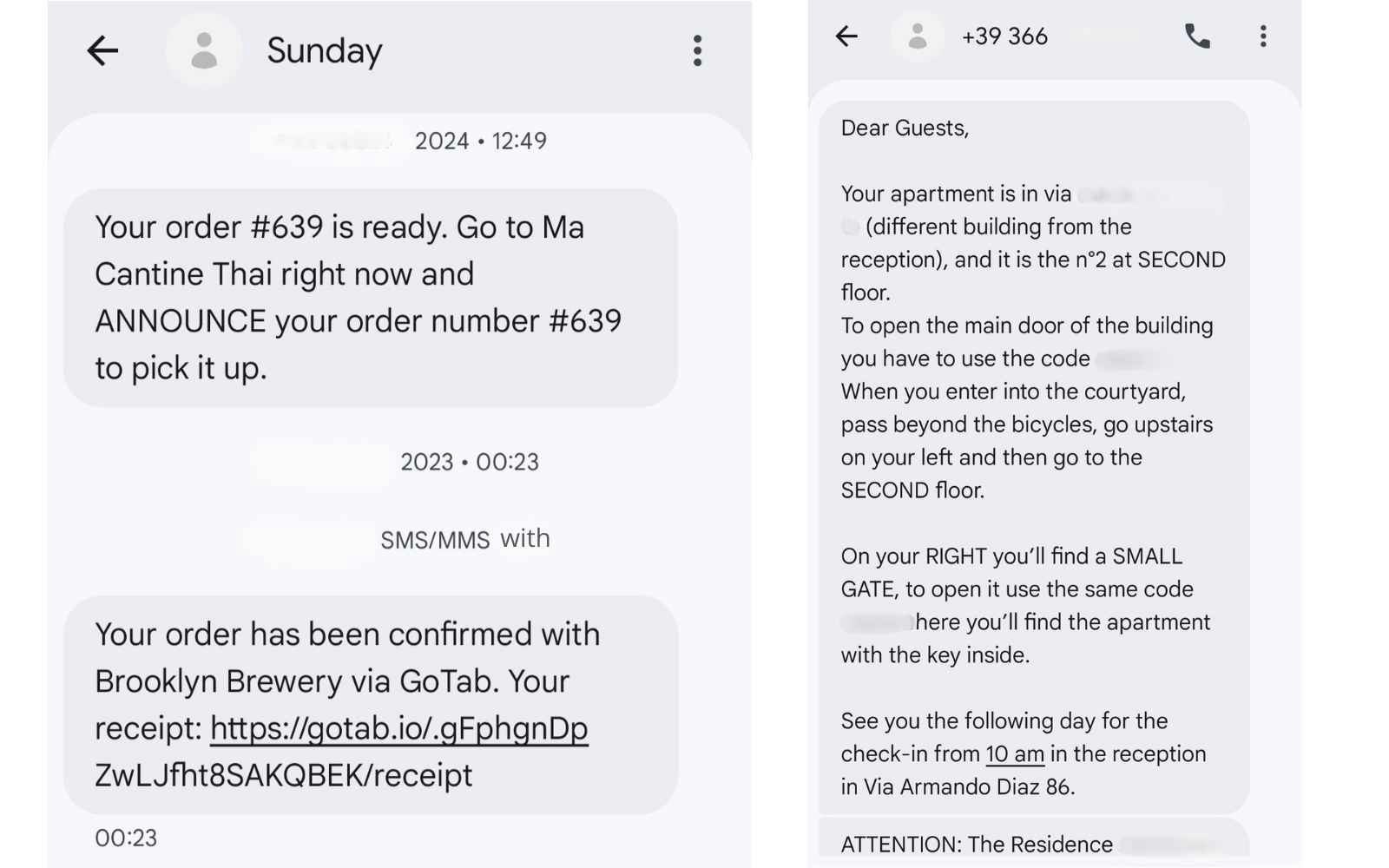
Transactional SMS, which support the customer relationship: order confirmation, appointment reminder, delivery notification or service update.
Depending on the context, SMS can therefore act as a marketing activation channel or a relationship communication tool. It contributes to the customer experience throughout the entire lifecycle.
However, it differs from purely technical notifications: a security alert or system message follows a functional logic. SMS marketing, by contrast, is part of a broader communication and engagement strategy.

A powerful channel within CRM
Sometimes perceived as costly or even outdated, SMS holds a unique position within CRM strategies. No other channel offers comparable read rates: most messages are viewed within minutes of being received.
👉 Its immediacy is a major advantage. A simple text message can reach a customer almost instantly, without relying on an algorithm or competing in a crowded inbox.
It is also a more personal touchpoint, with strong responsiveness. SMS appears directly in the phone’s messaging space, increasing both visibility and impact.
It fits naturally into a multichannel approach, without replacing other communication levers. Email marketing, push notifications and paid campaigns each serve complementary purposes.
SMS proves particularly effective in certain contexts: rapid follow-ups, limited-time offers, action reminders, critical notifications or interactions requiring immediate attention.
Use cases in campaigns
In marketing, SMS is used at different stages of the customer relationship. Its high visibility makes it an ideal channel for high-attention communications.
Among the most common use cases:
Targeted promotions. A time-limited offer, personalised incentive or commercial reminder can be delivered directly and immediately.
Follow-up scenarios. Abandoned cart, pending payment, appointment reminder or incomplete action: a text message enables rapid re-engagement.
Loyalty initiatives. SMS supports relationship programmes and lifecycle strategies. It reinforces interactions, highlights status and strengthens key moments in the customer journey.
Useful notifications. Order confirmation, delivery tracking or practical updates contribute to the overall customer experience and enhance perceived service quality.
Reactivation or retention campaigns. A well-targeted message can reconnect with inactive customers or those at risk of churn.
The objective remains the same: deliver the right message, at the right time, to the right audience.
The critical role of data
As with any outbound strategy, the effectiveness of an SMS-based marketing campaign depends on the quality of the data being used. The accuracy of phone numbers is the first critical factor. Invalid numbers, duplicates or outdated data reduce campaign performance and generate unnecessary costs.
Segmentation plays an equally decisive role. Targeting directly impacts relevance, engagement and brand perception. Since SMS is a direct channel, marketing pressure must be carefully managed. Excessive messaging can lead to fatigue or opt-outs.
Timing also significantly influences results. A message sent at the right moment greatly increases the likelihood of interaction. Conversely, poor timing diminishes the channel’s impact.
Finally, omnichannel consistency is essential. Customers interact with brands across multiple touchpoints. Text messages must therefore fit seamlessly into the overall experience.
SMS marketing and channel orchestration
SMS never operates in isolation; it is part of a broader ecosystem of channels and interactions. Communications must remain aligned and consistent, regardless of the channel used.
CRM teams therefore arbitrate between email marketing, push notifications and SMS. From a broader marketing perspective, paid advertising campaigns may also be included.
Each channel serves different purposes and levels of attention. Effective orchestration aims to prevent overexposure: multiplying messages without coordination risks damaging the customer relationship.
The composable CDP: a natural complement to a CEP
Customer Engagement Platforms (CEPs) excel at campaign execution. They orchestrate customer journeys and trigger messages across multiple channels. Key players include Brevo, Braze, AllMySms, Selligent and Klaviyo.
A Customer Data Platform (CDP) does not replace automation tools. Instead, it enhances their effectiveness by ensuring the reliability of the data that fuels campaigns. A composable CDP operates upstream, addressing data source management, identity unification and data freshness
It leverages the company’s data warehouse to capture signals, unify profiles and maintain a consistent customer view. Activation tools can then rely on more accurate and harmonised data.
This approach also reduces the multiplication of silos and fragile synchronisations between systems. The benefits are immediate: more precise targeting, more consistent segments, better control of marketing pressure and more relevant interactions.
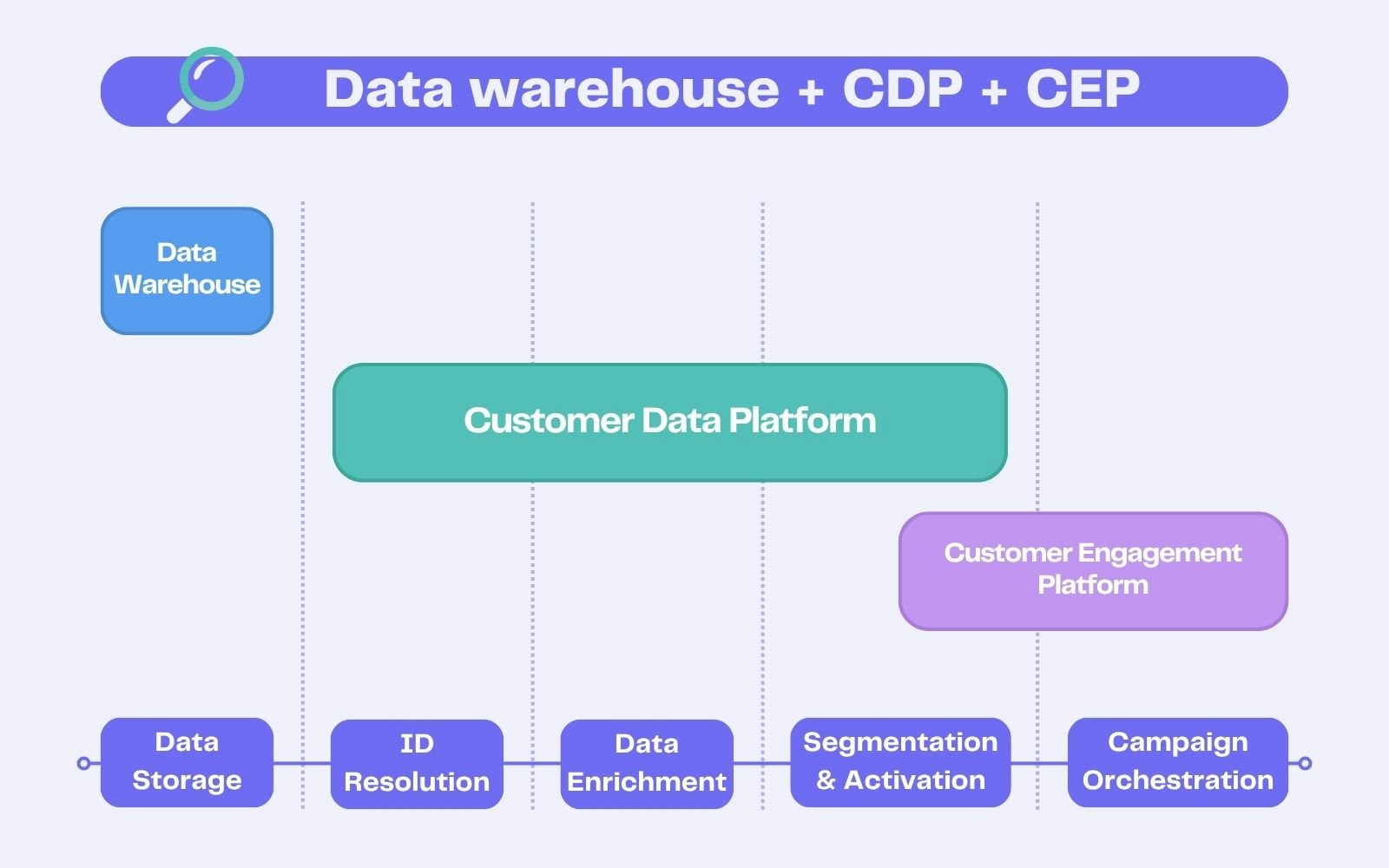
Data warehouse, CDP and CEP
Best practices and regulatory framework
SMS marketing is built on direct communication. This proximity requires simple yet essential rules to preserve customer trust:
Prior consent is the foundation of any campaign. A clear opt-in ensures that customers agree to receive marketing messages.
An immediate opt-out option must be included in every message. STOP-type mechanisms protect the user experience and limit unwanted solicitations.
Clear sender identification is crucial. An SMS must be clearly attributable to the brand to avoid confusion or negative perception.
Control of timing and marketing pressure influences how messages are received. Excessive frequency or poorly timed sends can damage the customer relationship.
Data minimisation, a key principle of GDPR, remains fundamental. Only the data necessary for campaign execution should be used and retained.
Traceability of marketing actions is essential. Keeping records of consent sources, activation rules and send histories facilitates governance and compliance.
Beyond regulatory requirements, these best practices directly impact campaign performance and credibility. From a technical perspective, SMS format constraints require concise copywriting.
A message should not exceed the standard 160-character limit to avoid being split into multiple texts, which would affect readability and budget. Short copy, shortened links and clear wording help preserve channel efficiency.
In addition, the rise of unwanted or fraudulent SMS messages has increased user vigilance. Brands must pay close attention to targeting quality and message legitimacy to avoid being associated with such practices.
Even though SMS remains a highly effective CRM channel, the challenge lies in integrating it into a broader messaging strategy.
RCS and channels such as WhatsApp enrich the experience (interactive content, conversational features), while reinforcing the importance of consent and multichannel orchestration.
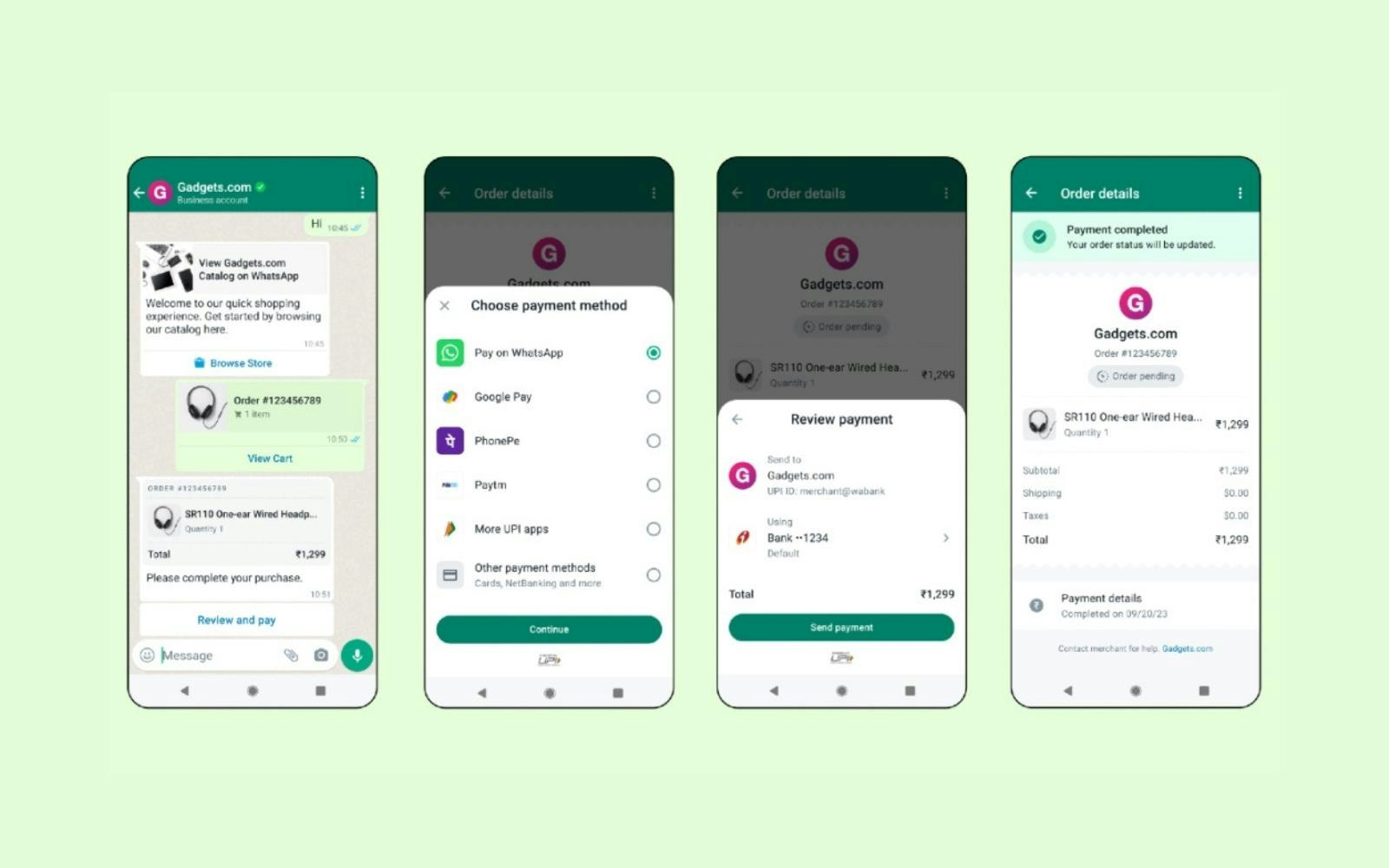
Conversational marketing (Source: WhatsApp)
Measuring performance
Like any marketing channel, SMS requires precise performance tracking. This is especially important given that even a single text message costs a few cents. Despite its very high open rate, SMS is therefore more expensive than email.
With large-scale sends, a targeting mistake can significantly impact profitability. KPIs help assess the real effectiveness of campaigns.
Classic metrics provide an initial view: delivery rate, read rate, click-through rate and response rate. These measure the immediate reaction to sent messages.
Business metrics offer a more strategic perspective. Conversion rate, revenue generated or incremental impact help estimate the channel’s contribution to overall performance.
Some results may be influenced by context, targeting or communications delivered via other channels. A/B testing, message variations and timing adjustments help optimise campaigns.
Conclusion
More than three decades after the first text message was sent, SMS remains a powerful marketing lever. It enables brands to reach customers quickly and trigger action at key moments in their journey.
It is also a demanding channel that leaves little room for approximation (marketing pressure management, targeting accuracy, budget control). Performance ultimately depends on data quality: accurate contact details, precise segmentation, proper timing and omnichannel consistency.
Effective orchestration prevents overexposure and protects the customer experience. Strong governance is essential to manage consent and ensure compliant practices.
To go further, contact us to discover how DinMo’s composable CDP simplifies the implementation of a coherent activation strategy.
FAQ
Is SMS marketing more effective than email?
Is SMS marketing more effective than email?
SMS and email serve different purposes. SMS benefits from near-instant read rates and high visibility. Email, on the other hand, allows for richer and more detailed content. It is also less expensive.
Effectiveness primarily depends on context, message and timing. In a high-performing CRM strategy, these channels are complementary and should be orchestrated according to objectives and marketing pressure.
Is specific consent required to send marketing SMS messages?
Is specific consent required to send marketing SMS messages?
Yes, SMS marketing relies on explicit consent. Customers must clearly agree to receive promotional messages on their mobile devices.
The requirements may vary depending on regulatory frameworks and specific situations. In practice, transparent opt-in and an immediate opt-out option are essential prerequisites to ensure both compliance and a positive customer experience.
How often should you send SMS messages without annoying customers?
How often should you send SMS messages without annoying customers?
There is no universal frequency. It depends on the perceived value of the messages, the targeted segment and the customer lifecycle stage.
Excessive pressure leads to opt-outs and declining engagement. Brands must test, measure and adjust their sending frequency. Consistency with other CRM channels remains key to preventing overexposure.