

Price Skimming: High pricing strategy as a success lever
6min • Last updated on Jan 5, 2026


Olivier Renard
Content & SEO Manager
We never tire of those images seen worldwide. With each product launch, queues stretch outside Apple stores. Although this phenomenon has faded in recent years, it symbolises the brand's ability to create a unique buzz thanks to its premium positioning.
This strategy, known as price skimming, relies on high prices to maximise perceived value and attract a clientele willing to invest.
Key Takeaways:
Price skimming involves launching a product or service at a high price to maximise profitability and enhance its high-end image. It contrasts with the penetration pricing strategy.
It is primarily used for innovative, luxury, or high-value products and targets customers willing to pay for exclusivity—the "cream of the crop."
Key benefits include immediate profitability, a perception of superior quality, and differentiated positioning.
This marketing strategy also carries risks, such as limited adoption or exclusivity perceptions that might deter some consumers.
👉 Explore what price skimming entails, its benefits, and limitations. Dive into concrete examples and learn when and how to apply it effectively. 🎯
What is price skimming?
Definition and core principles
Price skimming is the strategy of setting a high price for a product at launch, then gradually lowering it.
This approach targets customers willing to pay a premium for exclusive or innovative products—the cream.
This model is based on three core principles:
Innovation: The initial high price is justified by unique or groundbreaking features.
Exclusivity: Attracting a clientele seeking distinction.
Differentiation: Reinforcing the perception of quality and added value.
Price setting is a cornerstone of the marketing mix. Adopting a price skimming policy allows businesses to fully leverage the potential of the most profitable market segments.
The strategy hinges on the idea that early adopters or enthusiasts are willing to pay a higher cost to access novelties. It also strengthens the product's premium image and positions the brand in the high-end market space.

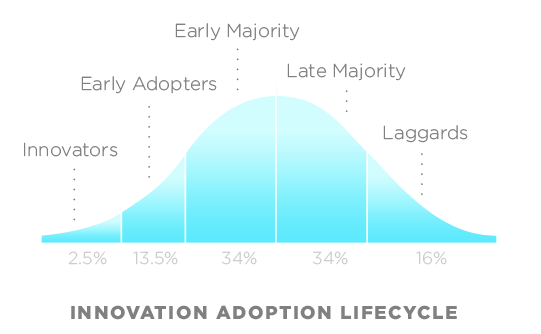
Innovation adoption curve (Source: Wikipedia*)
Advantages of price skimming
Maximising margins and recovering R&D costs
Price skimming targets consumers willing to pay more to get a product as soon as it launches. These early adopters, often less price-sensitive, enable businesses to generate significant revenue quickly.
In industries like technology or luxury, where research and development costs are substantial, skimming helps offset these investments with high margins from initial sales.
Creating a high-end brand image
Have you heard of the Veblen effect? Also known as the "snob effect," it’s a paradox theorised by economist Thorstein Veblen: demand for certain products increases as their price rises.
By pricing its offerings higher than competitors, a brand can enhance its premium or exclusive perception.
It elevates the product, positioning it as a luxury choice for a select few. It attracts customers seeking distinction and social recognition.

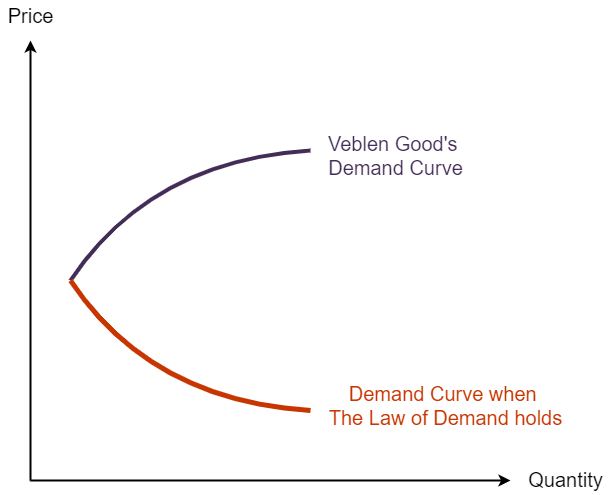
Veblen effect (Source: Wikipedia)
Limiting competitive entry
Price skimming can also serve as a barrier to entry. It discourages new competitors from investing in a market where a brand is already established as a leader.
Innovative companies deter potential entrants, forcing them to choose between high prices or lower-quality products to remain competitive. This gives skimming brands a window to dominate their target market before competitors introduce imitations.
Risks and drawbacks
Limited product adoption
By setting an initially high price, price skimming deliberately excludes certain consumers, especially those for whom price is a key factor. This may slow product adoption, particularly in price-elastic markets.
The brand’s image may also suffer if prices appear unjustified compared to perceived value.
Less effective in highly competitive markets
After the initial launch phase, competitors might introduce cheaper alternatives to gain market share. A high price can then reduce sales volumes and expose the pioneering business.
This risk is particularly pronounced in competitive markets with multiple players offering similar products or services. For example, after Nespresso's success, Senseo introduced a more affordable alternative in 2001 to attract price-sensitive customers.
Managing price reductions
When prices are lowered to attract a broader audience, early adopters may feel betrayed and perceive this reduction as unfair. This frustration can tarnish the brand’s reputation and affect long-term loyalty.
This perception risks alienating initial customers and harming the brand's image. Communication surrounding price adjustments must be carefully managed to avoid backlash.
For this reason, high-end luxury brands rarely implement true price skimming.

Queue outside an Apple Store (Credit: Apple)
Comparison of pricing strategies and examples
Every pricing strategy is based on specific marketing objectives and approaches, depending on the characteristics of the market and consumers. Discover their principles, advantages and application sectors to identify the one that best meets your needs.
Criteria | Price skimming | Penetration Pricing | Dynamic Pricing | Freemium |
|---|---|---|---|---|
Principle | Set a high price at launch, then gradually reduce it. | Set a low price to attract a large customer base quickly. | Adjust prices in real time according to demand or other factors. | Offer a free version to attract users to a paid version. |
Main objective | Maximise profits from early adopters. | Conquer market share quickly. | Maximise profits according to market conditions. | Convert free users into paying customers. |
Examples of brands | Apple (iPhone), Sony Playstation, Tesla, Roche, LVMH, Nespresso. | Netflix, Oppo, Uber, Coca-Cola | Amazon, Uber, Air France, Booking, Zalando. | Spotify, Dropbox, Slack, Canva, Zoom. |
Sectors of application | Technology, pharmaceuticals, food (luxury). | E-commerce, consumer products. | Transport, e-commerce, hospitality. | SaaS, mobile applications. |
Key benefits | High margins, premium image | Rapid sales volume, customer acquisition and loyalty. | Maximise revenue opportunities. | Attract a large user base from the outset. |
Limitations and risks | Loss of price-sensitive customers, negative perception of price cuts. | Low initial margins, uncertain long-term profitability. | Complexity of price management, limited transparency. | Low conversion to paid version, high cost of serving free users. |
Comparison of pricing strategies
Let's take a look at the key steps to successfully implementing an effective skimming policy.
When and How to implement price skimming?
Ideal conditions for skimming
Price skimming works particularly well for innovative or highly differentiated products. It is ideal when competition is limited, allowing for high prices without losing market share.
This model applies notably in sectors where exclusivity is crucial, such as cutting-edge technologies or patented products. Consumers are often willing to pay a premium for access to novelty or a unique experience.
Steps to successfully apply price skimming
Analyse price sensitivity: Study your target market to identify customer segments that are least sensitive to price. These are the early adopters willing to purchase at a high price.
Evaluate fixed and variable costs: Calculate the necessary investments in R&D, production, and marketing to ensure profitability from the first sales. Price skimming relies on high margins.
Plan price reductions: Schedule gradual price decreases to expand your audience after attracting early adopters. These reductions must be measured to preserve the product's premium image.
Emphasise premium value: Highlight the product’s unique features and benefits to justify the high price. Effective communication reinforces the high-end image and attracts consumers seeking quality and exclusivity.
Conclusion :
Price skimming remains a powerful approach to maximising profits from the outset while enhancing the brand image of your products.
By targeting segments willing to invest more in exclusive or innovative products, it offers unique opportunities for value enhancement. However, it requires careful market analysis and risk anticipation, such as competitor entry or managing price reductions.
👉 Thanks to data, DinMo helps you better address your customer segments and get the most out of your pricing strategies. 🚀
*Source: Wikipedia
FAQ
How can you avoid frustrating early buyers when prices drop?
How can you avoid frustrating early buyers when prices drop?
Early buyers can feel frustrated if prices fall too soon after a product launch. To prevent this, companies can offer early adopters exclusive benefits — such as extended warranties, priority access to future products, or loyalty discounts.
Clear communication around the product’s premium value and long-term benefits also helps manage expectations. Apple, for example, emphasises the innovation behind new iPhone models, which helps justify higher launch prices.
Careful management of the timing of price reductions makes them easier to accept. Companies can use data to anticipate optimal pricing adjustments, avoiding overly abrupt drops that could upset customers while still protecting profitability.
What data and tools can you use to optimise a price skimming strategy?
What data and tools can you use to optimise a price skimming strategy?
Implementing a price skimming strategy requires accurate information on pricing, demand forecasts and detailed competitive analysis. Companies need to monitor customer behaviour — including purchasing patterns and demand elasticity — in order to make informed decisions.
Predictive analytics tools and Customer Relationship Management (CRM) platforms can help analyse these indicators. For example, businesses can use pricing tools to simulate the impact of price reductions on margins over time.
Market research is also valuable for understanding the competitive landscape and identifying segments that are willing to pay a premium price. By combining these insights, companies can refine their strategy to optimise margins while remaining competitive.
Which sectors don’t use this strategy, and why?
Which sectors don’t use this strategy, and why?
Highly competitive sectors or those with high price sensitivity, such as fast-moving consumer goods (FMCG), often avoid price skimming. For these businesses, lower prices typically drive higher demand and faster market penetration, making a penetration pricing strategy more effective.
Sectors such as public transport or utilities also tend to avoid skimming, as they serve a broad population with widely varying income levels. In addition, some companies can’t rely on skimming because their offerings lack exclusivity or innovation.
For example, commodity products such as generic clothing or entry-level electronics focus on affordability to stimulate demand, leaving little room for premium pricing.