



Social commerce: turning your social networks into a sales channel
8min • Last updated on Mar 3, 2026


Olivier Renard
Content & SEO Manager
[👉 Summarise this article using ChatGPT, Google AI or Perplexity.]
Social networks now bring together 5.66 billion active users, representing nearly 7 in 10 people worldwide (We Are Social). Usage continues to surge: adults use an average of 6.75 platforms per month, while social media has become the leading brand discovery channel among younger audiences (Meltwater).
More than 20 years after the launch of Facebook, social networks are far more than influence channels. They are becoming fully fledged points of sale, where users can discover a product, interact with a brand and complete a purchase in just a few clicks.
Key Takeaways:
Social commerce involves selling products or services directly through social platforms. The social network acts as the sales channel, from discovery through to payment.
It is now a core component of marketing strategies, with many brands using it to accelerate sales and build a more direct relationship with customers.
Compelling content, social proof, community building and the right choice of formats all play a key role in driving performance.
A data-driven approach enables better targeting, campaign optimisation and a clearer view of the real impact of social commerce on revenue and customer value.
👉 What is social commerce, and how can you integrate it effectively into your strategy? Discover the key levers to master, as well as the formats and channels to prioritise when selling on social media. 🔍
What is social commerce
Social commerce refers to selling products or services through social networks, either directly on the platform or via its built-in shopping features.
It represents a new way of buying online, where the social platform becomes a fully fledged sales channel. Customers can discover a product in a video or post, interact with the brand, read reviews, and complete a purchase in just a few clicks.
Also known as social shopping, its success is driven by a seamless user experience and access to a large audience. Transactions take place where users already spend their time: Instagram, TikTok, Facebook or Pinterest.
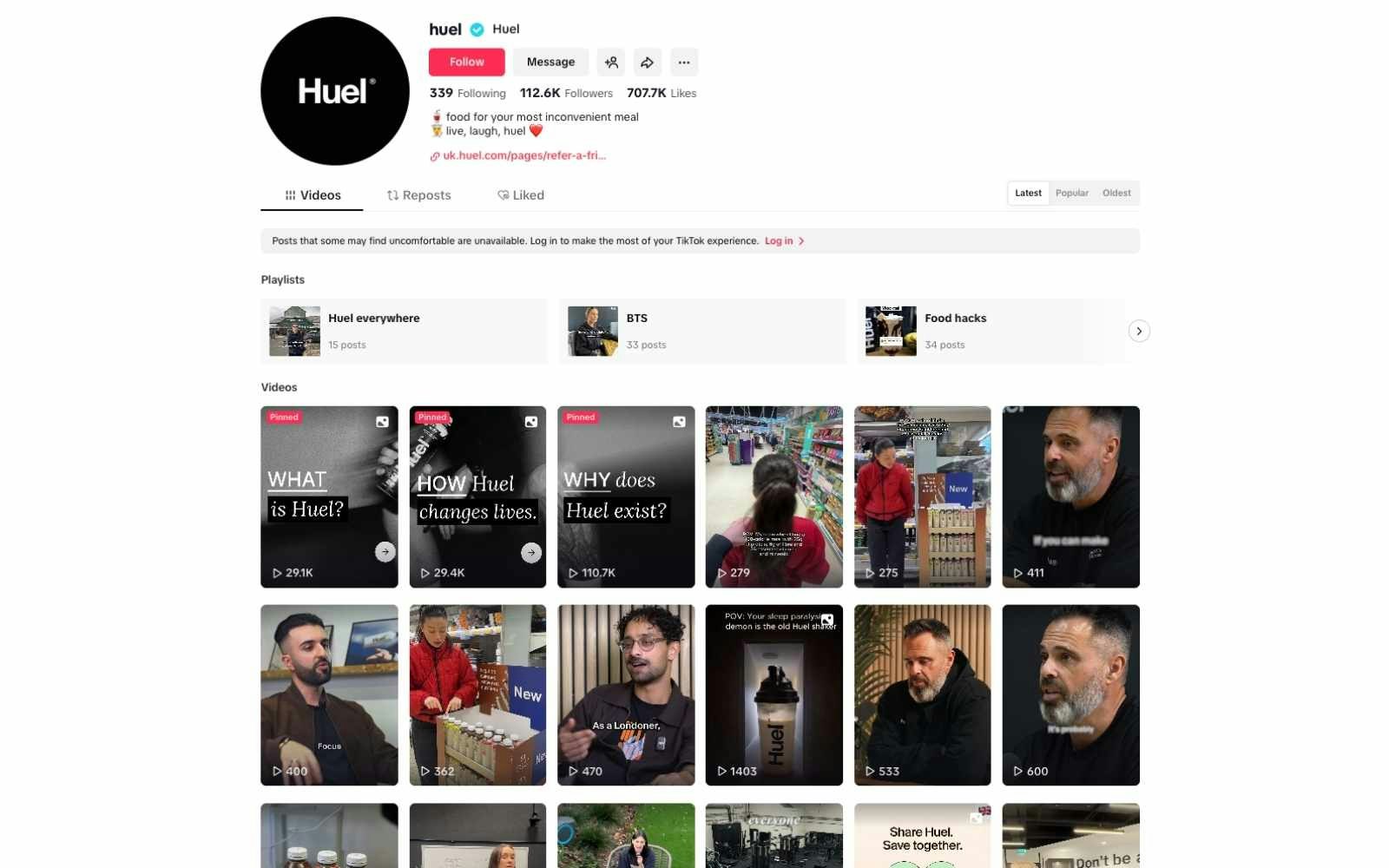
Huel makes perfect use of digital channels to promote its brand (credit: TikTok)
E-commerce, social selling, affiliation, social commerce: what’s the difference
These terms are sometimes used interchangeably, but they refer to distinct marketing practices.
E-commerce: in its traditional sense, this covers any sales activity conducted online (via a website, an app, or any internet-connected channel).
Social selling: a more relationship-driven commercial approach, particularly well suited to B2B. The goal is to build trust and start conversations, for example on LinkedIn or via direct messages. The purchase is not necessarily completed on the platform itself.
Influence / affiliation: here, social platforms are used to drive discovery or recommendation. A creator promotes a product and generates sales through a link, a promo code or a partnership.
Influence can therefore be seen as highly complementary to social commerce, which itself is a subset of e-commerce.
Social proof at the heart of the model
Commerce on social networks is growing because it relies on a powerful lever: social proof. This is one of the persuasion principles identified by American professor Robert Cialdini. Before making a purchase, consumers want to read reviews, see real-life usage and compare options.
User-generated content (UGC) reinforces this reassurance phase. Reviews, unboxings or product demonstrations often inspire more trust than traditional advertising.
Social commerce has accelerated significantly with the rise of short, immersive video formats, the maturation of live shopping, and the expanding possibilities enabled by AI.
Social platforms are becoming increasingly effective at recommending products at the right time, to the right audience. Algorithms detect signals of interest, allowing brands to deliver more personalised content and offers.
Examples of high-performing brands
Some brands perfectly illustrate the potential of social commerce, using simple yet effective mechanics.
Sephora relies on educational and inspirational content (tutorials, demonstrations) and highlights strong social proof across its channels.
Crocs has popularised a “video-first” approach rooted in TikTok culture. The brand leverages creators, trends and short-form formats designed to spark engagement.
P.Louise Cosmetics shows how a beauty brand can build a strategy centred on community and creators. UGC, product demos, live formats and close interaction with the audience directly support conversion.
ASOS illustrates another D2C model: a brand with a strong focus on content and inspiration, turning its audience into buyers through a consistent, always-on presence across social platforms.

Two brands that are very active on TikTok Shop: Crocs and P. Louise Cosmetics (source: TikTok)
Key platforms
While some networks are primarily inspiration-led, others focus more on fast conversion or conversational marketing. Each brand needs to choose its channels based on its audience, products and objectives.
The Meta ecosystem: Instagram, Facebook, WhatsApp
Meta plays a distinctive role in social commerce. Its ecosystem includes Instagram, Facebook and WhatsApp, each serving complementary use cases.
Instagram (2 billion monthly users) remains the most visual platform. It is also one of the most cross-generational and the most product-oriented. Instagram allows brands to combine photos, videos, short-form formats and shoppable content, making it highly effective for discovery and inspiration.
Launched in 2004, Facebook often delivers broader reach. Its community-driven mechanics (groups, discussions) are valued by its 3 billion monthly users. Despite an ageing audience, it remains a powerful channel for amplifying visibility and re-engaging users.
WhatsApp is the most widely used conversational platform in the world, with around 2 billion monthly users. For brands, it is used to reassure, respond, recommend and convert at the right moment. In some countries (Brazil, Indonesia, USA), it has become a key touchpoint in the purchase journey.
💡 Meta offers a range of commerce features (product tags, shops, catalogues, marketplaces), which vary by country. Some options may be available in one market and not in another, potentially limiting the experience.
In 2025, the company led by Mark Zuckerberg phased out native checkout, reverting to payments completed on the brand’s website.
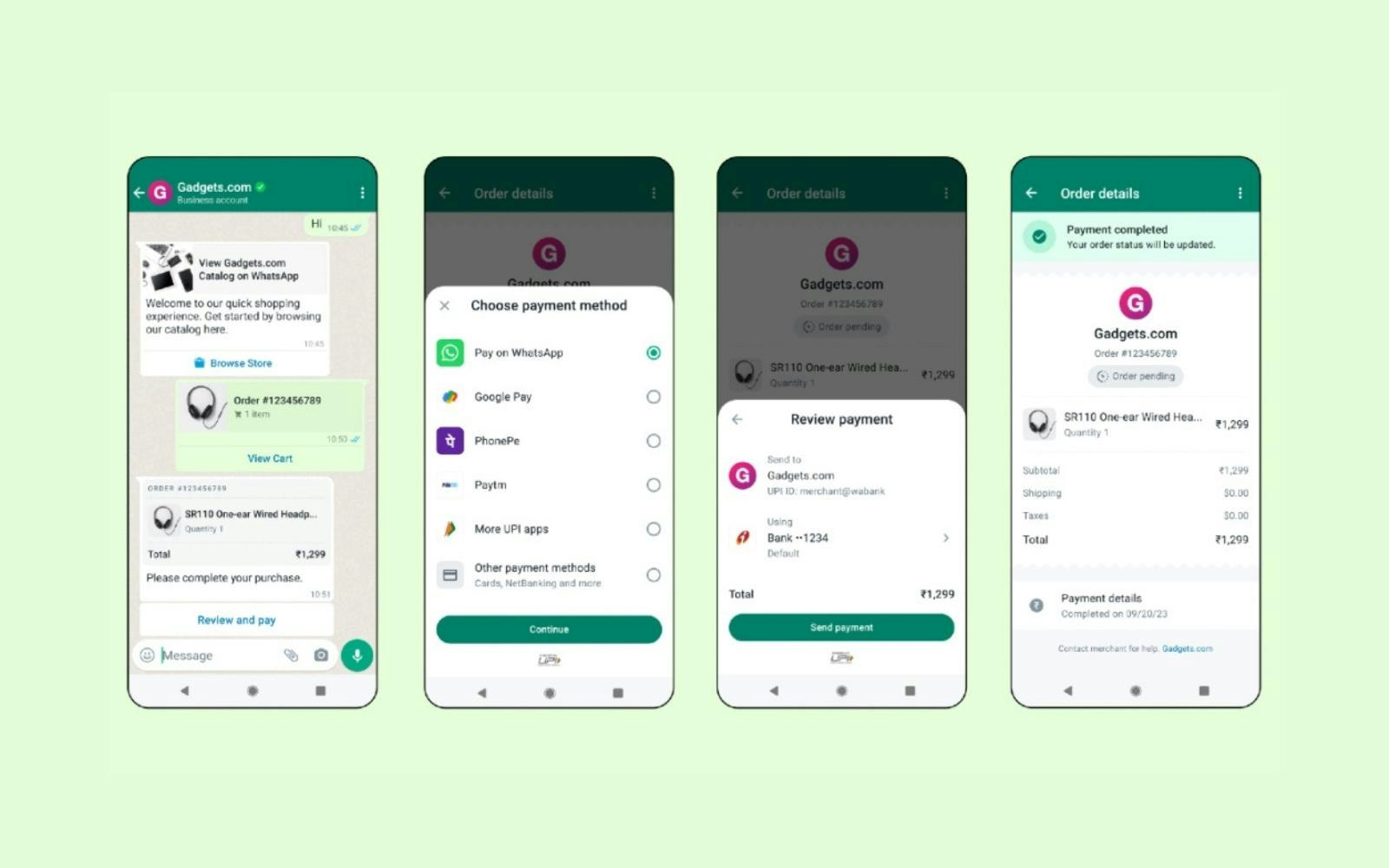
Conversational marketing (Source: WhatsApp)
TikTok and live shopping
TikTok has become a major player in social commerce thanks to one dominant format: video.
The Chinese platform officially launched TikTok Shop in the United States in 2023. Its European rollout accelerated with initial launches in 2024 (UK, Ireland, Spain).
A true next-generation take on teleshopping, TikTok Shop delivers a seamless experience, bringing millions of consumers and thousands of brands together in one place.
TikTok combines three key strengths: a massive audience, content designed to capture attention, and a highly effective recommendation engine. The journey is straightforward: discovery → social proof → immediate purchase.
Its parent company, ByteDance, reported more than $500 million in transactions in the United States during the Black Friday–Cyber Monday period alone.
Other widely used platforms
Other platforms can also play a key role depending on the industry:
Pinterest: built around inspiration and purchase intent. Users come looking for ideas, and Pins and product catalogues can become powerful retail levers.
Snapchat: particularly relevant for certain verticals (fashion, beauty) thanks to immersive experiences, especially AR try-ons.
YouTube: a strong driver for influence and video formats. Shorts boost discovery, especially when combined with longer-form content.
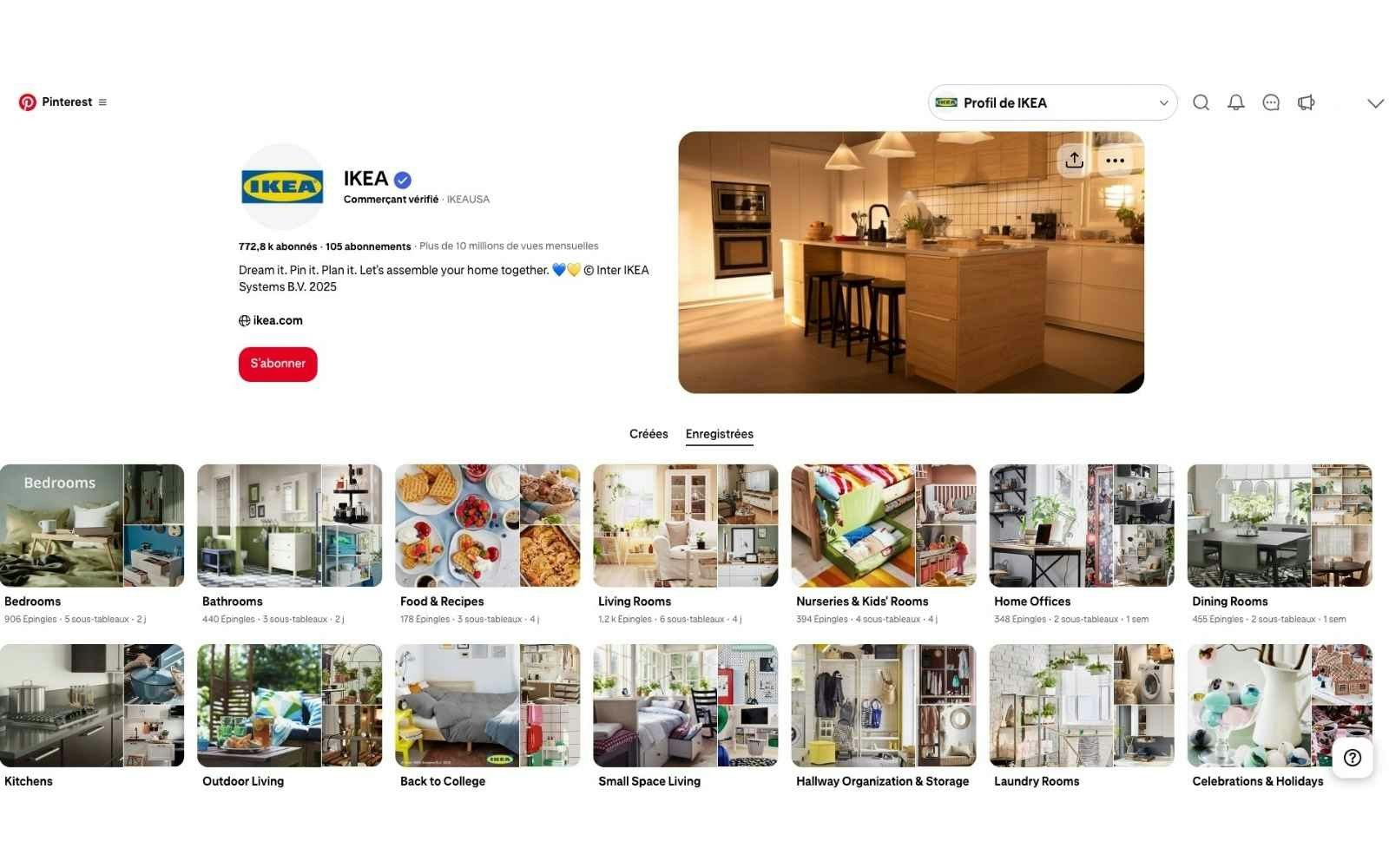
Decorating inspiration from IKEA (credit: Pinterest)
Some platforms are better suited to discovery, others to conversion or trust-building. The right choice depends on your objectives, but also on local audience habits. In China, for example, it is virtually impossible to operate without WeChat, the essential “super app”.
Formats and levers that drive sales
Beyond platforms, it is content that ultimately triggers purchases. Four main formats stand out:
Shoppable content (photos, videos): showcasing products in context with a direct purchase link reduces friction.
Live shopping: live formats allow brands to answer questions, demonstrate products in real time and create urgency (limited offers, exclusives). They significantly enhance the customer experience.
UGC and micro-influencers: perceived as more authentic, user-generated content builds trust, provides social proof and reassures potential buyers.
Integrated shops and social shopping: native shops, product tags and catalogues improve the experience by offering a true digital storefront.
Conversational commerce (WhatsApp / Instagram / Messenger): messaging apps are also sales channels. A conversation can remove final barriers and accelerate the purchase decision.
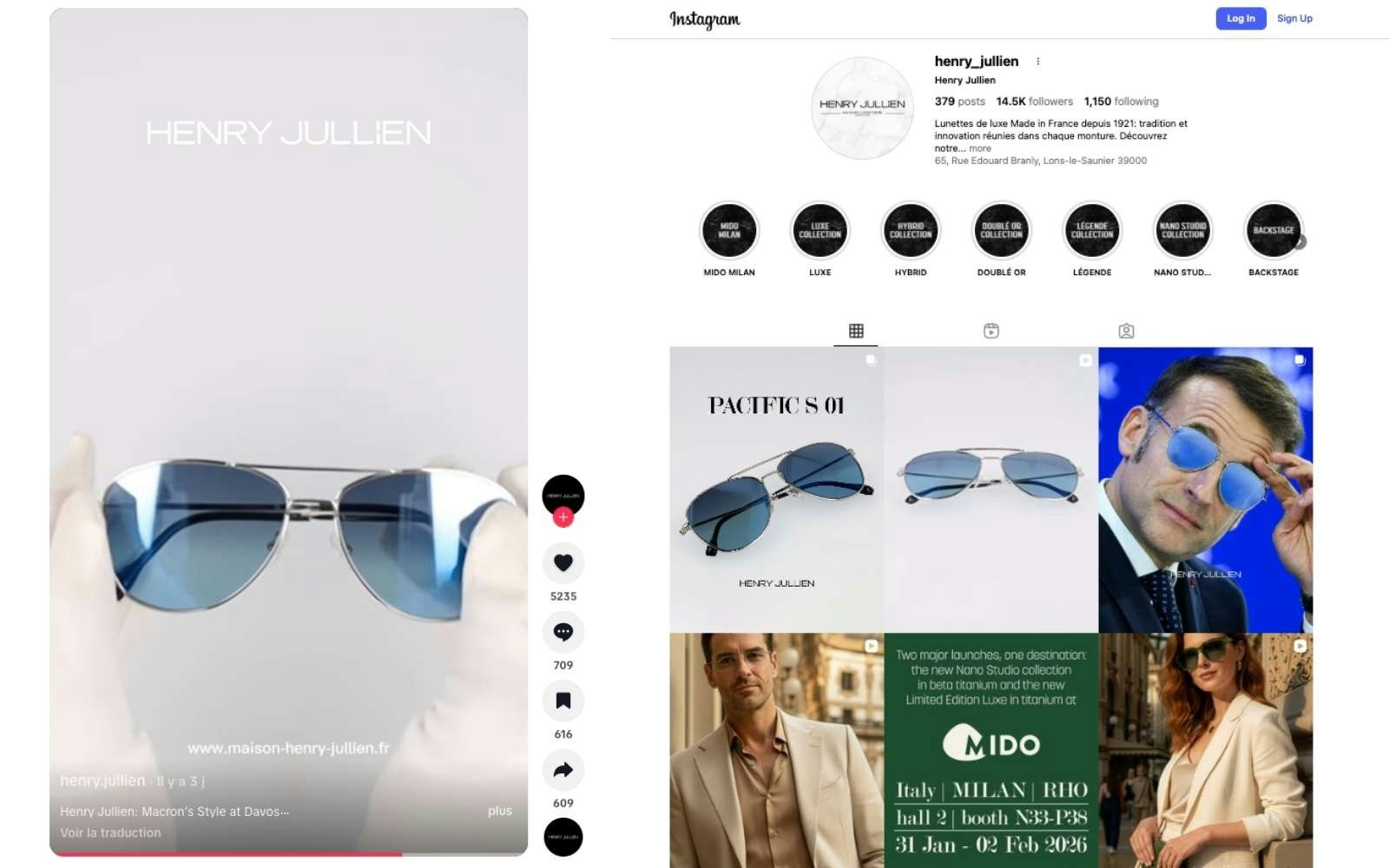
"For sure". The french brand Henry Jullien successfully capitalised on the hype surrounding Emmanuel Macron’s sunglasses (source: TikTok et Instagram)
Steps to build an effective social shopping strategy
1️⃣ Clarify your objectives
Start by defining what you expect from social commerce: acquisition, conversion or repeat purchases. Not all brands have the same priorities.
Some aim to generate revenue quickly, while others focus on activating and engaging a community on social platforms. Set a primary metric to track from the outset.
2️⃣ Choose the right products and structure your offer
Products that perform best often share the same characteristics: they are easy to understand, highly visual and simple to demonstrate on video.
Think about how you package your offer too: bundles, limited editions or exclusive promotions. A clear value proposition significantly boosts conversion.
3️⃣ Build a content strategy
In social commerce, content is your storefront. Plan formats that fit the channel: product demos, tutorials, before-and-after content, unboxings.
Combine brand content with user-generated content (UGC). Creators and micro-influencers increase credibility and spark desire ahead of the purchase.
4️⃣ Choose the right platforms
Platform selection should support your objectives and reach your audience where they already are. Instagram and Pinterest work particularly well for inspiration and product imagery. TikTok is extremely effective for discovery and trends.
WhatsApp, meanwhile, can accelerate conversion through conversation. It is often better to excel on one or two platforms than to spread yourself too thin.
5️⃣ Streamline the purchase journey
The simpler and more frictionless the customer journey, the more you sell. Build trust with reviews, social proof and clear answers to common questions.
Live shopping also helps remove barriers, while conversational channels can quickly trigger a purchase.
6️⃣ Measure and continuously improve
Social commerce is ultimately about driving conversion. Track clear metrics, analyse what works by platform, format and audience, then optimise accordingly.
Data helps you refine campaigns and measure the real impact on customer value.
👇

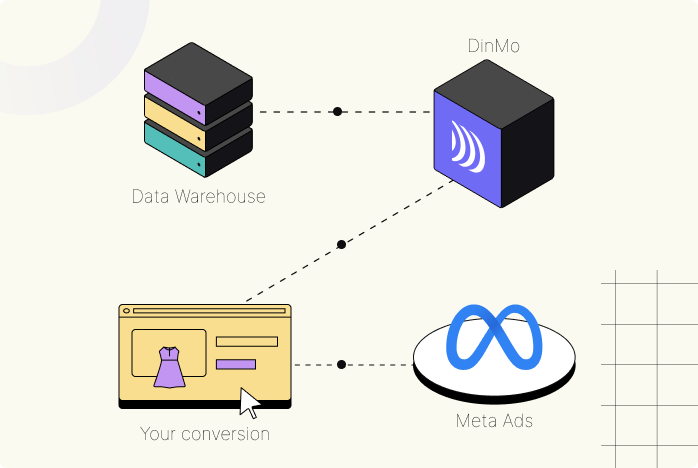
Meta CAPI: the complete guide
Measuring performance beyond likes and ROAS
Traditional social media KPIs (views, likes, comments) remain useful for assessing engagement. However, they do not always indicate whether a strategy is actually driving sales.
The goal is therefore to manage performance using business-oriented metrics.
Revenue generated: how many products or services were purchased via your social platforms, or following an interaction on a social network.
Conversion rate: among users exposed to shoppable content (photos, videos, live shopping), how many actually go on to make a purchase.
Repeat purchases: social commerce is not just about converting once. It also helps nurture the relationship and trigger subsequent purchases.
Customer value: some campaigns attract one-off buyers, while others build a base of profitable, long-term customers. Tracking LTV provides a longer-term view of performance.
💡 To measure effectively, connect your social media actions to your first-party data (store, app, CRM). This 360° view makes it possible to assess the real impact on revenue and optimise what truly works.
The role of a Customer Data Platform (CDP) in social commerce
Unifying customer data around a single foundation: social commerce generates signals across multiple platforms. A CDP brings all customer data together (website, CRM, offline transactions), avoiding siloed channel-by-channel management.
Reconciling identities to connect social interactions with purchases: the same customer may interact on Instagram, visit your website, then convert later. A CDP helps reconstruct journeys to understand what genuinely drives sales.
Building dynamic, actionable segments: based on unified data, you can create dynamic segments such as purchase intent, new customers, repeat buyers, VIPs, or churn-risk audiences.
Activating and personalising on social platforms: segments can be pushed to Meta, TikTok or Pinterest to fine-tune campaign targeting. With DinMo, activation is handled seamlessly via the Reverse ETL module, making messages and offers more relevant.
Measuring and steering performance with a business lens: a CDP links social interactions, conversions and customer value. Brands can also send events via conversion APIs to improve tracking reliability.
Conclusion
Social commerce is a strategic lever for brands. It has become a lasting evolution in consumer behaviour and the purchase journey.
It drives sales, strengthens customer relationships and accelerates growth. Achieving this requires high-quality content, strong social proof, a clear offer, a frictionless journey and smart use of data.
A composable CDP enables this data-driven, omnichannel approach. It connects social interactions to customer data, activates the right audiences and measures the real impact on sales.
👉 Want to go further in activating your customer data for your marketing strategy? Discover how DinMo can support you.